Hebron residents face displacement as Israeli forces launch demolition campaign
A significant military operation in the West Bank has resulted in the destruction of homes and businesses, displacing hundreds of families days before a national election.
By Andre Williams ·
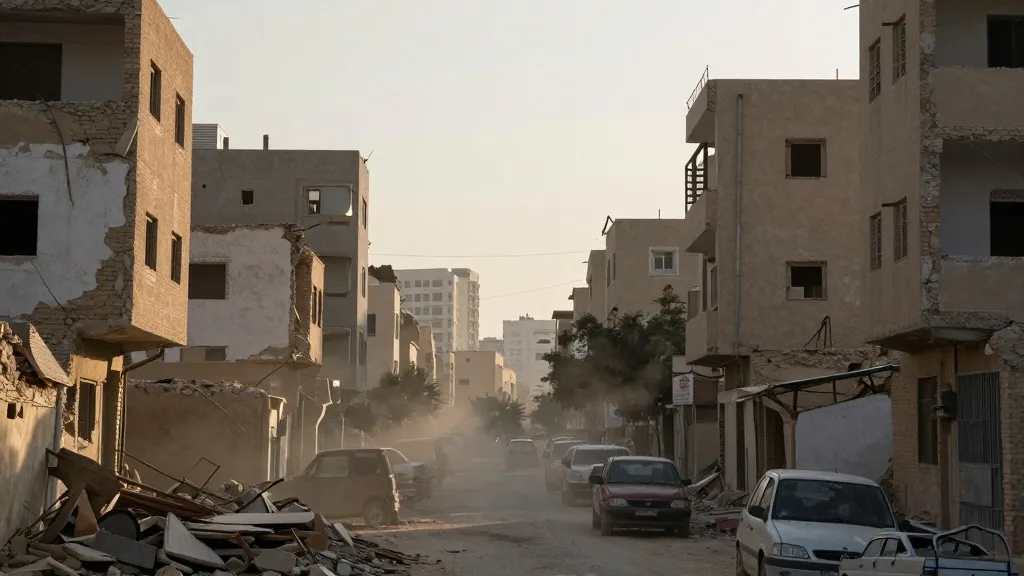
The tension between military objectives and civilian stability came to a head this week as Israeli forces initiated a major operation in the occupied West Bank city of Hebron. The campaign involves the systematic demolition of residential and commercial structures, a move that has uprooted hundreds of families from their homes. Local officials described a scene of widespread destruction, noting that bulldozers have leveled entire streets and disrupted the daily lives of the city's residents.
The operation began on Friday following the announcement by Prime Minister Benjamin Netanyahu. The trigger for the offensive was an attack on a checkpoint where two Israeli soldiers were killed by two Palestinian gunmen. Three other soldiers were injured in the incident, and both attackers were neutralized. Netanyahu stated that the military would target buildings near the attack site and the specific neighborhoods from which the gunmen originated. He described the planned destruction of these areas as a necessary measure to address the security threat.
In the days leading up to the operation, the Israel Defense Forces sealed off Hebron, significantly restricting the movement of its approximately 200,000 residents. The military stated in a social media post that it had identified dozens of targets across the West Bank and expected the operations to continue for several days. While the army did not immediately respond to specific media inquiries, the scope of the action suggests a sustained effort to alter the urban landscape of the city.
Mayor Youssef al-Jaabari reported that the focus of the demolitions was primarily on the Ein Deir Baha and Farsh al-Hawa neighborhoods. He indicated that the damage extended beyond homes to include businesses, industrial sites, and essential infrastructure. Al-Jaabari stated that dozens of families were forced to sleep outdoors, with some instructed to leave without their vehicles. He estimated that the military intends to displace 2,500 people from an area covering roughly 0.35 square kilometers of urban land. The city's governor and deputy mayor confirmed that at least 200 families had already been displaced.
The timing of the operation coincides with a critical political moment, as Israel's general election is scheduled for four days from now. Prime Minister Netanyahu, whose campaign emphasizes security, canceled his party's campaign events on Friday morning. He traveled to Hebron wearing protective armor and shared video footage from the site. He pledged to evacuate residents, conduct house-to-house searches for weapons, and dismantle all terrorist infrastructure. This public display of military engagement aligns with his platform's focus on decisive action against threats.
Netanyahu also revealed that he had reviewed plans for the largest military operation in the West Bank since 1967. He did not specify when this broader campaign might take place, leaving it unclear if the current Hebron operation is a precursor to those plans. In an interview with an Israeli television channel released on Saturday, he hinted at a significant development regarding the Palestinian Authority, which governs parts of the territory, describing it as a very big surprise.
The practice of demolishing homes of Palestinians suspected of involvement in attacks is a frequent occurrence in the West Bank. Israeli rights groups have often criticized this approach, characterizing it as a form of collective punishment. Netanyahu compared the current operations in Hebron to earlier campaigns in northern Palestinian refugee camps. During those 2025 operations, the military destroyed hundreds of homes and displaced tens of thousands of people, setting a precedent for large-scale urban demolition.
Reactions to the event have been mixed both locally and nationally. The Palestinian Authority called for urgent international action that goes beyond simple condemnation to prevent further forced displacement. Within the Israeli government, Finance Minister Bezalel Smotrich urged for a West Bank campaign similar to those conducted in Gaza or Lebanon. National Security Minister Itamar Ben Gvir went further, calling for the dismantling of the Palestinian Authority. These statements highlight the varying views on the strategic direction of the occupation.
Mayor al-Jaabari offered his own perspective on the motivations behind the timing. Speaking to journalists, he suggested that the operation was driven by the upcoming elections. He argued that the prime minister and his ministers were attempting to secure the votes of the far right and settler communities. The city now faces a period of uncertainty as the military operations continue and residents adjust to the changing conditions in their neighborhoods.
As the election date approaches, the situation in Hebron remains a focal point for observers. The balance between military action and civilian impact will likely be a central theme in the coming days. Residents continue to navigate the restrictions on movement and the aftermath of the demolitions, while political leaders prepare for the final stretch of the campaign. The outcome of the election may influence the pace and scope of future operations in the West Bank.
Source: BBC News