Gunmen Kill Nine at Jordan Church
A rare attack on a Greek Orthodox funeral in Karak left dozens injured and triggered a nationwide security response.
By Aever Bundji ·
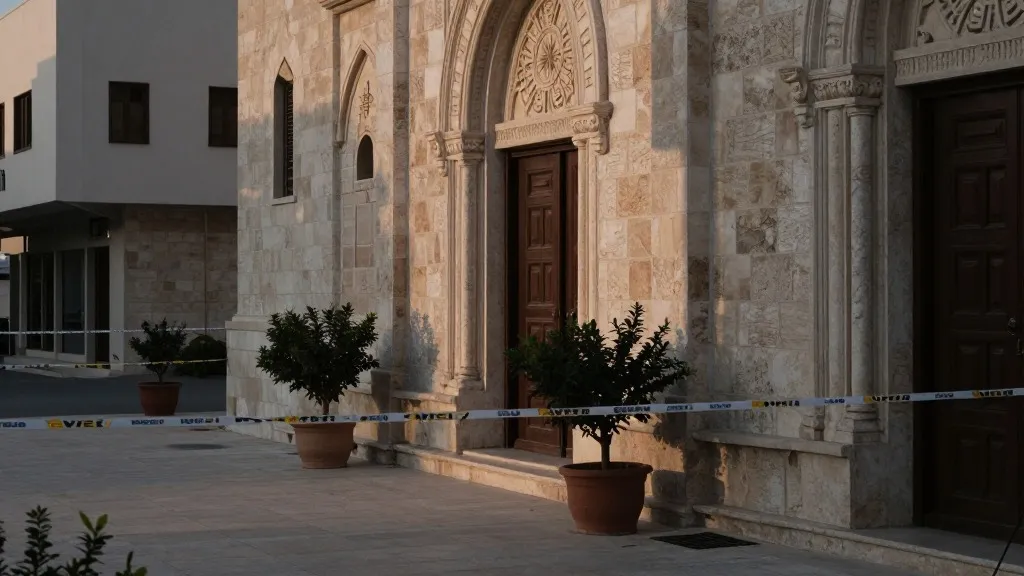
Families mourning a loved one at a church in Jordan found themselves under fire on Friday. Nine people lost their lives, and forty others were wounded when gunmen opened fire during a funeral service. This event marks a rare instance of violence targeting the country's Christian minority. The attack has changed the daily reality for many residents who previously viewed Jordan as a stable and safe place to live and worship.
The shooting occurred at St. George's Greek Orthodox church in Hamoud, located in the Karak governorate. Local authorities quickly moved to secure the area. Maj. Gen. Abdallah al-Maaytah, who heads the Public Security Directorate, stated that most of the injured were receiving medical treatment. He confirmed that the search for the remaining attackers was still ongoing. The health minister officially counted the number of injured individuals at forty. The speed of the response highlighted the government's focus on managing the immediate crisis.
Senior officials described the perpetrators as extremists. Interior Minister Mazin Al Farrayeh called the attack a terrorist act. He noted that it was too early to determine if the group had ties to known organizations inside or outside Jordan. No group has yet claimed responsibility for the shooting. The lack of a clear claim adds to the uncertainty surrounding the specific motives behind the violence.
Video footage from a security camera at the church showed the sequence of events. The recording, aired on state-owned Al-Mamlaka television, captured three individuals firing from a pavement. They took cover behind trees and a low wall before running toward the church entrance. Reuters verified the authenticity of the video by matching the entry path and surrounding details. The visual evidence provided a clear picture of how the attackers moved through the scene.
Witnesses recounted a scene of chaos and fear. Priest Theodoros Soueiss told those present to get down as the shooting began. He described a sense of panic that took hold among the crowd. The gunfire was indiscriminate, and no one knew where a bullet might land. Khaled Burqan, who attended the funeral, said dozens of people were present when the gunmen fired for several minutes. Another witness, Ihab Ammareen, saw people collapse on the floor with blood. He described the sound of crying, wailing, and screaming as difficult to describe.
Political leaders responded with swift action and strong language. Prime Minister Jafar Hassan posted on X that the attack was the result of a terrorist ideology. He stated that society would not be allowed to go down this path. King Abdullah visited Karak within hours of the shooting. He promised that the perpetrators would be punished with an iron fist. He added that those who try to divide Jordanians with bullets have no chance against national unity.
Security measures across the country were increased in the days following the attack. The US embassy in Amman reported on Saturday that security was stepped up at malls, foreign embassies, and other locations. This move reflects a broader effort to protect public spaces and diplomatic sites. The government aims to restore a sense of normalcy while maintaining a heightened state of alert. Citizens are now more aware of the security presence in their daily routines.
International leaders expressed their condemnation of the violence. UN Secretary General Antonio Guterres called attacks on civilians and places of worship unacceptable. Mike Waltz, the US ambassador to the UN, described it as a depraved and brutal attack. These statements highlight the global attention on the incident. The attack serves as a reminder of the ongoing challenges in the region. It also underscores the importance of protecting religious sites that draw pilgrims from around the world.
Jordan has been considered relatively stable, but US authorities have foiled attempted attacks by Islamist militants in recent years. The country was among the US allies in the region hit by Iranian attacks this year. Christians remain a minority in Jordan, which is home to several biblical sites. The attack has prompted a deeper look at how such ideas take hold. Hani Al-Mbaydeen, who gathered outside a government hospital in Karak to support the wounded, voiced the shock felt by many. He said the state must investigate where such dark ideas come from and how they enter the minds of children. This call for understanding reflects the community's desire for long-term safety and clarity.
Source: The Guardian