Supreme Court to Decide if Federal Officers Keep Personal Liability Shield
The Court will hear a case involving a prisoner's back injury that could define accountability for federal agents nationwide.
By Yasmin Parker ·

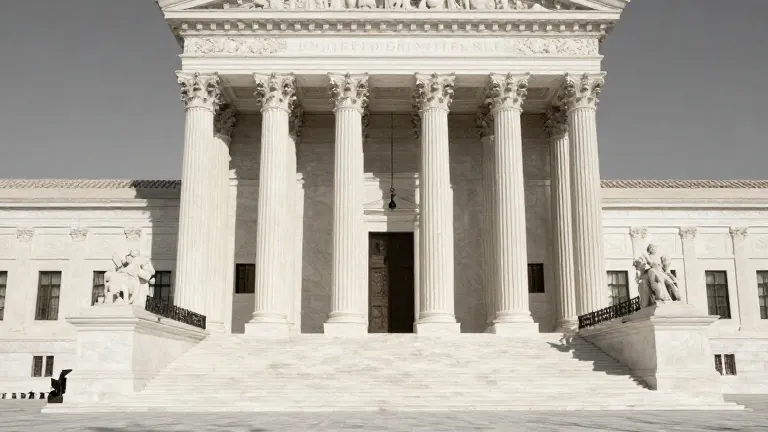
The Supreme Court will hear arguments on Monday in a case that could shield federal law enforcement officers from personal liability for constitutional violations. The dispute stems from the treatment of Kekai Watanabe, a 40-year-old inmate in a federal prison in Hawaii. Five years ago, Watanabe was beaten with a makeshift weapon during a gang riot inside the facility.
Watanabe reported serious back pain to a nurse. The nurse told him to stop being a cry baby. Seven months later, doctors diagnosed him with a fractured tailbone. He sued the nurse for violating his Eighth Amendment right against cruel and unusual punishment. The case tests the scope of Bivens, a 1971 legal precedent that allows individuals to sue federal officers directly for damages.
Steve Vladeck, a Georgetown law professor, filed a friend of the court brief arguing the outcome is stark. He stated the issue is whether the country holds federal law enforcement officers accountable when they violate clearly established constitutional rights. Vladeck warned that without this legal avenue, officers would enjoy absolute immunity regardless of how egregious their conduct is.
The defense argues Watanabe's case is distinct from the 1980 landmark precedent that established the current standard. In that earlier case, a prisoner died from untreated asthma. The nurse's lawyers contend that because Watanabe survived his 2021 attack, the facts are different enough to dismiss the claim. Federal courts have historically required plaintiffs to show their situation is identical to existing precedent.
Mary Hampton Mason, who worked at the Justice Department for nearly 35 years, said the Bivens precedent has been hollowed out for years. She described rogue officers as rare and noted that problems are typically systemic. Mason argued the Court should overrule the precedent because it gives plaintiffs false hope. She pointed out that in the last 20 years, she is aware of only one Bivens case resulting in a judgment for the plaintiffs that did not get reversed on appeal.
Gregory Cui, an attorney at the MacArthur Justice Center, countered that the low success rate does not account for settlements or the deterrent effect of lawsuits. Cui argued that damages are important because they provide the means for a person to pay for medical care or rebuild their life. He noted that if individual federal officers are financially on the hook, they may think twice before breaking the law.
Cui reported in a brief that the internal grievance process for people inside federal prison almost never works for inmates. He stated that inmates succeed just 1% of the time in changing access to medical care or improving conditions behind bars. Cui and other legal experts said the Court agreed to hear the case at a time when abuses by federal immigration agents are in the spotlight.
Critics argue now is the wrong time to eliminate one of the few avenues of accountability for errant officers. Vladeck said a world with no Bivens would be terrifying, especially today. Both sides agree Congress has the power to pass legislation providing a clear way to sue federal officers, but lawmakers have not advanced such bills so far.