37 Years Ago: One Impromptu Announcement Opened the Berlin Wall
A Stasi major at a single checkpoint made the call to let crowds through, triggering a chain reaction that ended the Cold War division of the city.
By Daniela Kelly ·
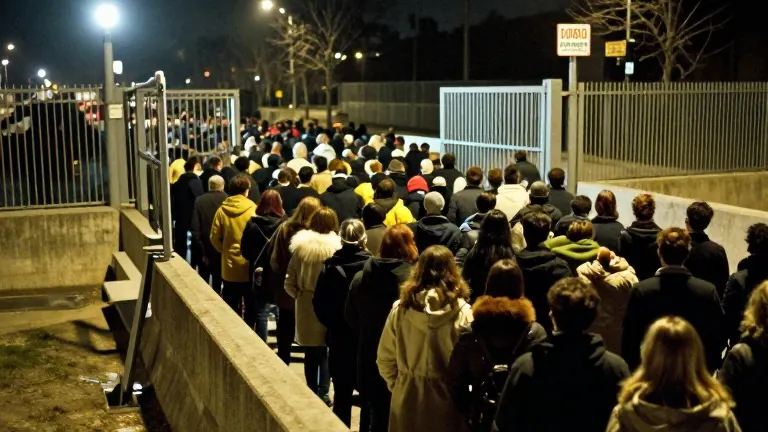
Twenty thousand people crossed from East to West Berlin in a single hour on the evening of Nov. 9, 1989, following a verbal announcement that no written order had yet authorized. The surge occurred at the Bornholmer Straße border crossing, one of nine points along the barrier, after a Stasi major decided to open the gate to prevent a crowd crush.
The event began with a communication error at a government news conference. Günter Schabowski, a government spokesman, read a memo provided by party leader Egon Krenz. The note stated that citizens could travel to the West without proving a family emergency. Schabowski had not been briefed on the details. When reporters asked when the policy would begin, he paused and said, “To my knowledge, this takes effect … immediately … without delay.”
The announcement was broadcast live to a radio audience. Tens of thousands of East Germans, who had been protesting for an open border, heard the news and moved toward the wall. At the Bornholmer Straße checkpoint, Stasi Maj. Harald Jäger was breaking for dinner when he heard the broadcast. He later told his biographer that he nearly choked on his sandwich upon hearing the details.
Jäger faced a dilemma. The standing orders for the 100-mile barrier, built in 1961, instructed guards to capture or eliminate trespassers. No new orders had been sent to his post. As thousands of people pressed against the crossing, Jäger feared they would be crushed. He refused to order lethal force. He directed guards to process individuals for passage. When the crowd pressure did not ease, he opened the gate.
The barrier had served as the physical symbol of the Iron Curtain for 28 years. Its construction was officially justified to keep out Western spies and prevent West Berliners from buying goods at subsidized East German prices. In practice, it stopped the flow of skilled workers to the West. Soldiers in watchtowers fired on those who tried to breach it. At least 140 people died in attempts to cross, including Ida Siekmann, a 58-year-old nurse in 1961, and Winfried Freudenberg, a 32-year-old engineer in 1989.
Western leaders had long used the wall as a focal point for criticism of Soviet bloc repression. West Berlin Mayor Willy Brandt called it the “Wall of Shame.” President John F. Kennedy declared “I am a Berliner” in 1963. President Ronald Reagan addressed the Soviet premier at the Brandenburg Gate in 1987, saying, “Mr. Gorbachev, tear down this wall.”
The opening of the Bornholmer Straße crossing triggered a chain reaction. Other checkpoints followed suit, replacing standoffs with celebrations. West Berliners met East Berliners with champagne and flowers. The fall of the wall marked the beginning of the end for communism in Eastern Europe. Bulgaria, Czechoslovakia, and Romania followed East Germany in transitioning their governments. The Soviet Union dissolved in 1991.
Germany reunified within a year of the wall's fall. The physical barrier was dismantled, and city streets were reconnected. Berlin resumed its role as the capital of a single German state.