Court hears case on suing federal officers
The dispute centers on whether a prisoner can claim damages from a nurse who ignored his injuries, a question that affects immigration enforcement.
By Daniela Kelly ·
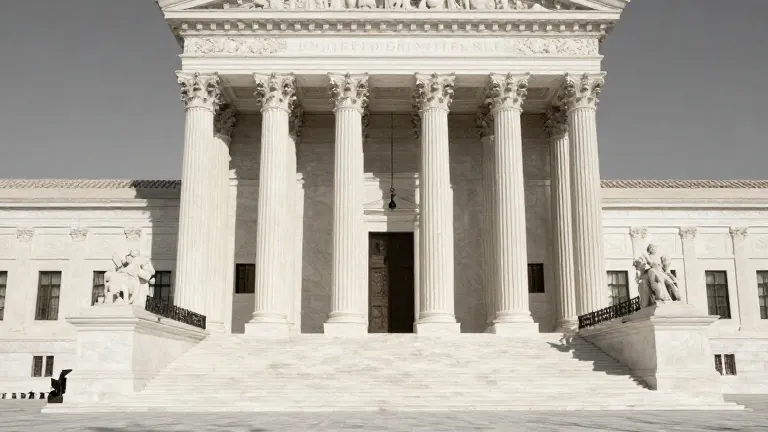
The Supreme Court will hear oral arguments on Monday regarding a 2021 incident inside a federal prison in Hawaii. The case asks whether federal law enforcement officers can be personally sued for violating constitutional rights. The petitioner, Kekai Watanabe, was beaten with a weapon made of a lock inside a sock. He complained of severe back pain to a nurse who told him to stop being a cry baby. Doctors later diagnosed him with a fractured tailbone seven months after the attack.
Watanabe, now 40, is seeking damages under the Eighth Amendment, which protects against cruel and unusual punishment. His lawyers argue that the current legal framework makes it too difficult for victims to hold federal agents accountable. This issue extends beyond prison walls to street-level enforcement, where immigration officers have faced accusations of using force against migrants. The ruling will determine if the Bivens doctrine remains a viable path for civil rights claims against federal officials.
Steve Vladeck, a law professor at Georgetown University, filed a friend of the court brief in support of Watanabe. He described the stakes as determining whether the country will hold federal officers responsible for breaking clearly established laws. Vladeck stated that the outcome is stark. He warned that without this legal avenue, federal law enforcement officers would enjoy absolute immunity regardless of how egregious their conduct becomes.
The defense team for the nurse argues that Watanabe's case is distinct from the precedent that allows such suits. The landmark case from 1980 involved a prisoner who died from untreated asthma. The nurse's lawyers contend that because Watanabe survived the gang attack, his injury is different enough to warrant dismissal. They argue that the court requires the facts in new cases to be identical to previous precedents to proceed.
Mary Hampton Mason, who worked in the Justice Department for nearly 35 years, believes the Bivens precedent has been hollowed out over time. She stated that rogue officers are rare and that failures are usually institutional results of agency culture and training. Mason noted that in the last two decades, she is aware of only one Bivens case that resulted in a final judgment for the plaintiff. She said that out of thousands of cases filed, most do not end in a favorable verdict for the person suing.
Gregory Cui, an attorney at the MacArthur Justice Center, countered that the low number of final judgments ignores the impact of settlements. He argued that the threat of financial liability deters bad behavior among federal agents. Cui emphasized that damages allow victims to pay for medical care and rebuild their lives. He stated that damages are a primary way to fix the harm caused by rights violations.
Cui also highlighted the ineffectiveness of internal prison grievance processes. In a brief filed with the court, he reported that inmates succeed in changing conditions through these internal channels just one percent of the time. Legal experts note that the Court agreed to hear this case while abuses by federal immigration agents remain in the public eye. They argue that eliminating this specific lawsuit option now is premature.
Both sides agree that Congress has the authority to pass legislation that creates a clear path for victims to sue federal officers. However, lawmakers have not advanced such bills to date. The Court will consider the arguments from both the petitioner and the respondent before issuing a decision on the scope of federal officer liability.