U.S. Army Set to Detonate Lead Explosives in Iowa Amid Legal and Community Concerns
The U.S. Army plans to detonate 68 barrels of unstable lead azide in Iowa this week, invoking emergency powers to bypass a recent court order that temporarily halted the operation.
By Yasmin Parker ·
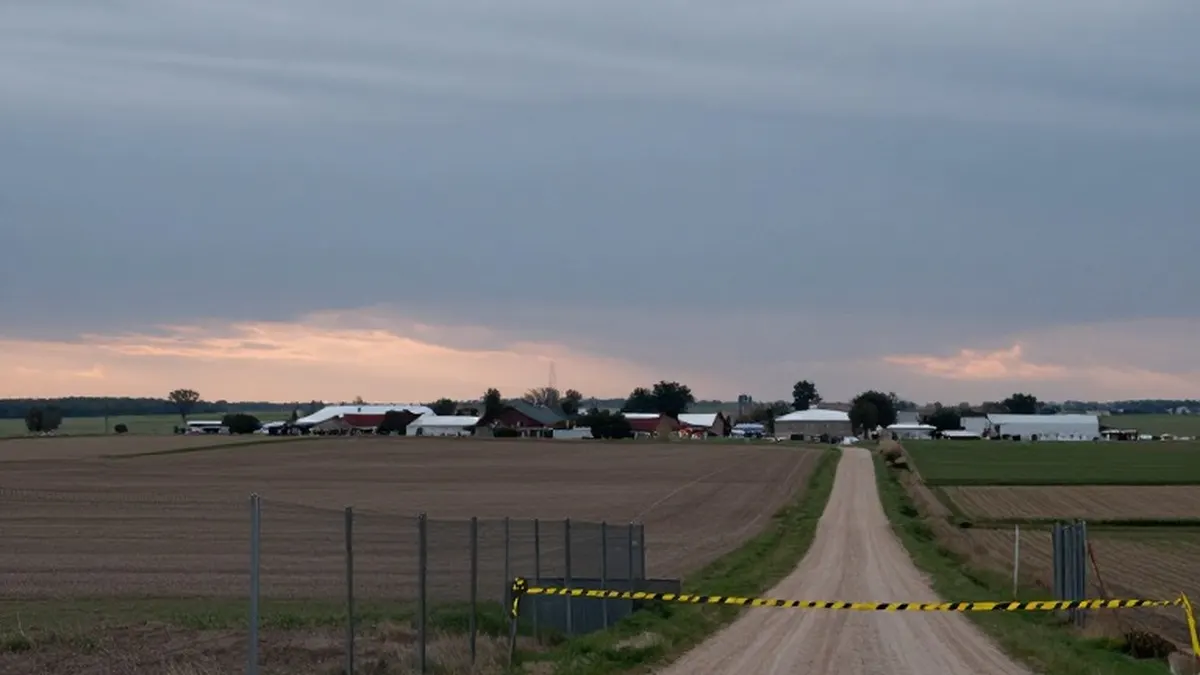
The U.S. Army intends to detonate 68 barrels of a toxic lead explosive in Iowa this week. The administration informed a court on Saturday that the military will proceed with the operation by invoking emergency legal powers. This move allows the Army to bypass a court order that was issued to block the controversial plan.
Last Thursday, the U.S. Court of Appeals for the 8th Circuit temporarily paused the detonation. The court froze the Army's environmental permit after environmental groups filed a lawsuit to stop the operation. In a filing submitted late on Saturday, the government stated that the Army plans to move forward without a permit. It is invoking an emergency munitions and explosives exception to federal environmental protection laws.
Federal officials argue that the detonation must occur within the next several days. They warn that a drop in temperature could destabilize the material, potentially leading to an uncontrolled explosion. The U.S. Justice Department explained in its court filing that a controlled detonation is necessary to protect the public from the greater threat posed by an uncontrolled blast.
The Army had previously postponed plans to detonate the degraded lead azide, an explosive used in military munitions. This initial delay followed public outcry from residents and farmers near Middletown, Iowa. The Justice Department initially indicated the Army would act by Tuesday. However, the Army later announced on the social media platform X that the detonation would take place on Wednesday. This timing was chosen to allow for optimal weather conditions and to ensure all mitigation measures were in place.
Lead exposure is known to cause serious health problems, particularly in children, including damage to the brain and nervous system. The Iowa Environmental Council and the Sierra Club's Iowa chapter challenged the detonation in court. They argued that the blast would release a toxic plume of lead dust into the air. Depending on weather conditions, this plume could travel as far as 160 kilometres north of the site.
Kerri Johannsen, senior director of policy and programs at the Iowa Environmental Council, told Reuters that the Army should provide more details. She emphasized the need for information on the precise timing, the expected travel path of the plume, and the precautions people should take. Johannsen noted that the lack of prior notice was a major concern, as many people, including state officials, did not have advance warning. She stated that there was not enough information being shared with the public.
The Iowa Department of Agriculture and Land Stewardship has recommended that cattle farmers near the detonation site move their livestock, feed, and equipment indoors or to alternate locations. However, farmers have told the environmental council that keeping livestock indoors is not a viable option in this situation, according to Johannsen.
In a statement on Thursday, acting Secretary of the Army Adam Telle said the Army had determined with the U.S. Environmental Protection Agency that a controlled detonation posed the lowest risk to the public. The Army advised people to avoid the affected area during the operation. Those who could not leave beforehand were urged to stay indoors, close windows and doors, and shut off heating and cooling systems that bring in outside air. Residents were also told to wet-clean surfaces children may touch to remove any lead dust once the exposure period has ended.
Jeremy Atwater, a resident of Augusta, Iowa, said he planned to head west because he expected the plume to blow south through his town. He described the situation as a significant problem and expressed his preference for any alternative to the bomb. The U.S. Army did not respond to a Reuters inquiry on Sunday about the precise timing of the detonation, stating that additional details would be forthcoming.