Army to Detonate 9,700 Pounds of Unstable Lead Azide in Iowa on Wednesday
Federal appeals court paused permit, but Army moved the schedule forward after finding no safe alternative to handling the degraded munitions chemical.
By Amir Shah ·
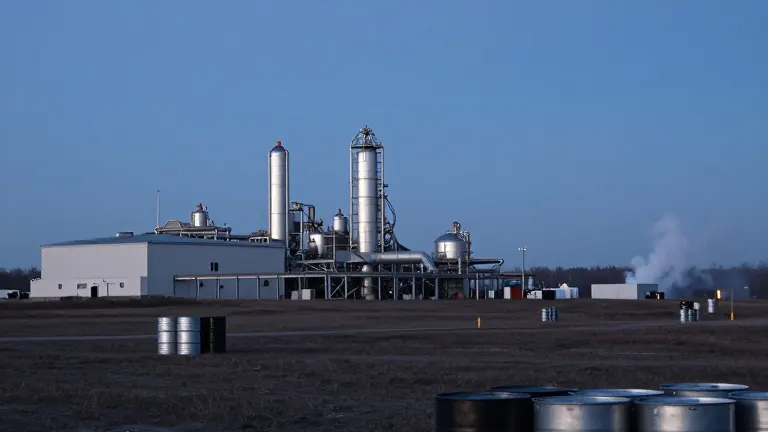
Residents in southeastern Iowa and northwestern Illinois must prepare for a chemical detonation on Wednesday. The U.S. Army plans to blow up 9,700 pounds of lead azide at the Iowa Army Ammunition Plant. The action shifts the risk of toxic lead exposure from a slow leak or spontaneous fire to a single, controlled air plume. The site sits less than 30 minutes from the state line and roughly 4.5 hours west of Chicago.
The Army announced the new timeline on Sunday night. This change follows a federal appeals court order that paused the permit indefinitely on Thursday. Environmental groups had filed for an emergency stay to halt the operation. A court filing late Saturday indicated the Army intended to proceed by Tuesday. The move to Wednesday allows for updated weather mapping before the blast.
Lead azide is a component in bomb-making materials. The chemical has destabilized over time inside barrels at the Middleton, Iowa facility. Army officials state the risk of spontaneous combustion increases as temperatures drop. They view detonation as the final and safest method to remove the material from the site.
U.S. Sen. Tammy Duckworth, a combat veteran, criticized the operation as poorly planned and communicated. She argued that families received abrupt evacuation orders without clear information on whether their homes or water supplies were safe. Duckworth called the situation a failure of leadership and pushed for a safer alternative to the blast.
The Army advises residents to stay indoors with windows and doors closed. Pets and livestock should be kept inside. Furnaces that pull air from outside should be shut off. People in the path of the predicted plume must clean cars, windowsills, and outdoor surfaces after the event. The Army will publish updated maps at army.mil/asc based on weather data to show affected areas.
Will Sander, a professor of preventative medicine at the University of Illinois Urbana-Champaign, noted that no amount of lead is safe for the body. He said the predicted plume levels are unlikely to cause noticeable clinical signs in people or pets. Symptoms of poisoning, such as fatigue, disorientation, and weakness, would be similar across species. Sander recommended that residents near the site stay inside for at least 24 hours after the detonation before cleaning up lingering dust.
Regarding ground contamination, Sander stated that the amount of predicted lead dust poses minimal risk to lawns or next season’s crops. The lead will dilute into the soil. Livestock are less sensitive to lead than wildlife. While lead can enter milk, the exposure levels are too low to be a major concern. Meat will not be contaminated because lead does not migrate into muscle tissue after ingestion.
Environmentalists and local lawmakers have voiced strong opposition to the plan. The Iowa Environmental Council stated on Sunday that new information in the Army’s Department of Justice filing suggests the problem is worse than initially reported. The group argued that the public needs immediate details on which communities will be most impacted. They also criticized officials for not considering all alternatives, such as neutralizing the drums with other chemicals. Army experts said handling the drums manually increased the chance of a fatal accidental explosion.
The Army cited EPA documents that show alternative methods were reviewed. Staff at the plant discovered the degraded barrels in March. Crystallization of the material created an unstable condition. The Army assembled experts in munitions chemistry, engineering, and environmental safety to develop the current plan. Predictive models show lead exposure levels will remain well below the threshold that would require additional action by the Environmental Protection Agency.
More Business · Consumer Alerts · Report a business · Got a Story?