Off-Broadway play uses Bluetooth technology to explore hearing loss and identity
A new one-man show at the SoHo Playhouse employs Auracast audio broadcasting to immerse audiences in the experience of hearing loss and self-discovery.
By Amir Shah ·
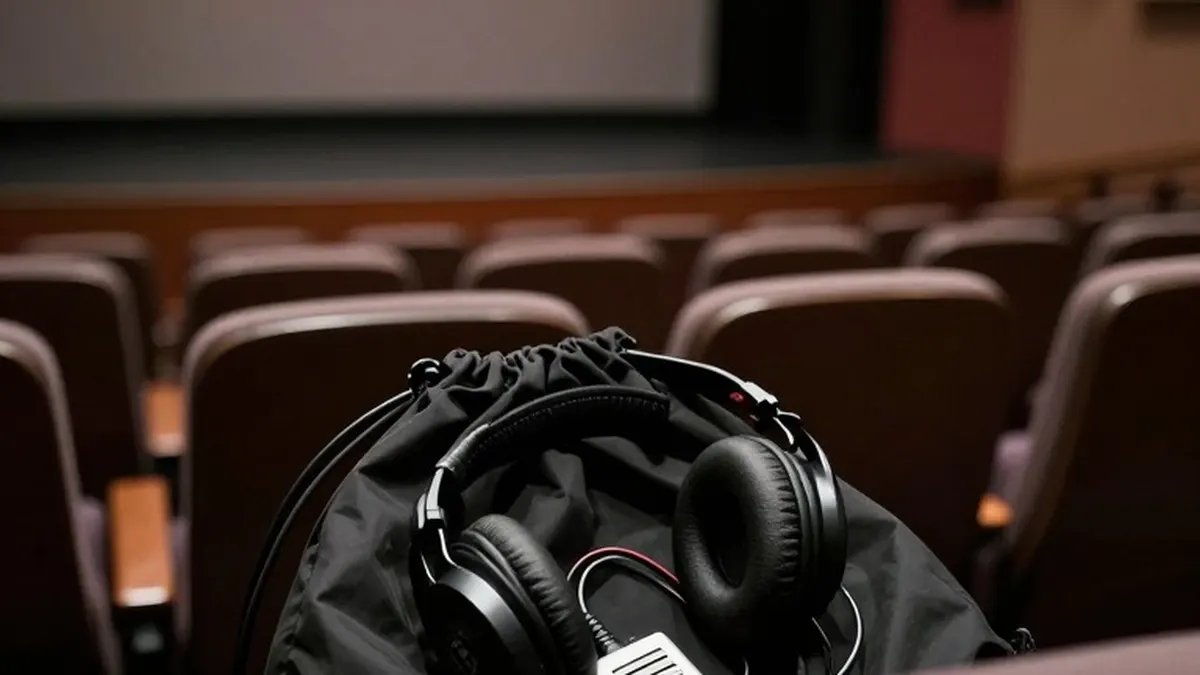
A 200-year-old row house in New York City houses the SoHo Playhouse, a 178-seat venue where a unique theatrical experience is currently unfolding. Upon entering, audience members receive black drawstring bags containing wired headphones connected to small Auracast receivers. As the crowd settles into their seats, ushers distribute these devices, which become central to the performance shortly after the play begins.
The production is titled Love Me, a one-man show created by stand-up comedian and former Saturday Night Live writer Drew Michael and director Prashanth Venkataramanujam. The narrative is structured in five chapters that examine various relationships in Michael’s life, all connected by the themes of his hearing loss and his journey of self-discovery. The show focuses on love and the human desire for connection, using the audience's personal audio devices as a primary storytelling tool.
The experimental sound design relies on Auracast, a Bluetooth-based technology capable of broadcasting high-quality audio streams to multiple nearby devices. Sound designer Daniel Kluger utilizes this system in conjunction with the theater’s standard speakers to create auditory experiences impossible in traditional setups. During the performance, tinnitus ringing and hearing test tones play between sections, serving as subtle cues that build toward Michael’s eventual realization about his condition.
Kluger manipulates sonic clarity to reflect the protagonist's perspective. Sounds from the theater speakers are sometimes intentionally muffled and further dulled by the headphones, giving viewers a sense of what Michael is hearing. In contrast, Michael’s inner monologue remains pristine and clear within the headphones. This monologue combines prerecorded tracks with a live feed from Michael’s stage microphone, allowing the audience to distinguish his internal thoughts from his external interactions.
The interplay of different sound sources can create intentionally confusing scenes. For example, during a stand-up segment, the audience hears the crowd’s reactions through the speakers, Michael’s internal reactions through the headphones, and his live performance through a muffled stage microphone. This layering forces the audience to concentrate on parsing the audio, mirroring the cognitive effort required when sounds are unclear or overwhelming.
The climax of the show involves a visual display of Michael’s audiograms over the years, coinciding with his major breakthrough regarding the invisible labor his hearing loss has imposed on his life. At this emotional peak, the audience is instructed to remove their headphones. The sudden absence of the devices, which they have worn for nearly the entire show, symbolizes the clarity of mind Michael achieves in accepting his condition.
In the final act, Michael explores his Deaf identity, arguing that denial rather than deafness itself is the primary challenge. He notes that while his hearing has never been worse, his self-affirmation has never been higher. The production is presented in partnership with Deaf West Theatre, which supports Deaf-centered storytelling. The show offers specific audio feeds for hearing aid and cochlear implant users, as well as captioned iPads for accessibility.
Michael himself uses Auracast-enabled hearing aids during the performance, which function as both hearing aids and in-ear monitors. He explains that this setup allows him to maintain contact with the audience while receiving the necessary audio feed. The show is not about hearing technology per se, but uses it to tell a story of connection and identity.
Michael highlights the tension between technological advances and cultural identity in the Deaf community. He suggests that while tech like hearing aids is beneficial, it should complement rather than divide Deaf identity. The successful collaboration between the Auracast technology and the narrative demonstrates how such tools can enhance accessibility while uplifting the core message of love and acceptance.
More News · National news · Report a business · Got a Story?