Q2 2027: The New Deadline for Unsupervised Tesla Driving
Tesla owners may soon be able to add their vehicles to the company's managed robotaxi network, though this restricted service will only operate within specific metropolitan zones.
By Jacob Leary ·
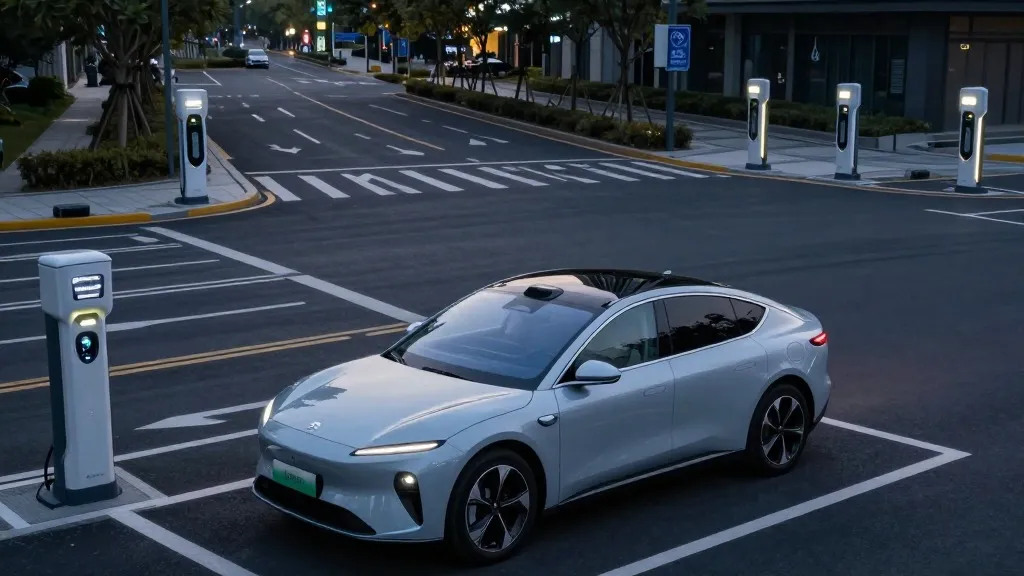
For Tesla owners who have invested in Full Self-Driving, the practical definition of unsupervised driving has shifted. Rather than gaining a vehicle that can navigate any route on demand, drivers will soon have the option to integrate their personal cars into Tesla’s existing robotaxi fleet. This change means that autonomous operation will be limited to specific geographic areas where the company already operates its managed service, altering the fundamental expectation of unrestricted mobility for customer-owned vehicles.
During the Q3 2026 earnings call, Ashok Elluswamy, Tesla’s AI chief, confirmed that this capability is targeted for the second quarter of 2027. He clarified that the initial step involves owners adding their vehicles to Tesla’s managed network rather than receiving a software update that allows the car to drive independently anywhere. Consequently, a customer’s car will only operate without supervision within the boundaries of the current robotaxi service areas.
The geographic scope of this service remains limited. Tesla’s robotaxi operations currently cover six U.S. metropolitan areas, with service zones often restricted to small slices of those cities. In Miami, for example, the coverage largely includes West Miami and a corridor extending toward Doral and Sweetwater. Similar small geofences were established in Orlando and Tampa in July. Within these zones, the service primarily utilizes low-speed routes, avoids highways, and sidesteps more complex driving environments.
Regulatory constraints further restrict the technology’s reach. In the Bay Area, the service is not fully unsupervised because California regulations require a safety driver in every vehicle. Tesla has chosen to maintain human drivers in this region to avoid releasing specific data to the California DMV, a requirement that applies to systems classified beyond level 2 autonomy. Meanwhile, the overall fleet size remains modest, with third-party tracking indicating only dozens of fully driverless Teslas on the road, a fraction of the larger scale previously discussed by company leadership.
This announcement marks the latest adjustment to a timeline that has been debated for nearly a decade. In July 2025, Elon Musk indicated that unsupervised FSD would be available for personal use in certain geographies by the end of that year. A year prior, he expressed surprise if the technology was not realized within the following year. However, owners of the HW3 hardware have already been informed that their existing computers cannot support unsupervised FSD, with no clear upgrade path provided.
The new target for 2027 represents a narrower product offering than the original pitch. The promise has evolved from a car that drives its owner anywhere to one that functions as a robotaxi within controlled zones. This excludes highway road trips, long-distance commutes, or cross-town travel unless the specific route falls entirely within the designated service area. The shift reflects a focus on integrating personal vehicles into a managed fleet rather than deploying a universal autonomous software update.
Elluswamy identified safety as the primary bottleneck for expanding the service. He noted that current limitations to low-speed roads are a precautionary measure while the company addresses complex environmental challenges. While he anticipates that these safety issues will be resolved by the following year, he acknowledged that the timeline remains an estimate rather than a guaranteed milestone. The company continues to balance its expansion goals with the need to validate its safety metrics across diverse driving conditions.
As the industry progresses, Tesla’s robotaxi service has accumulated nearly two million unsupervised miles by the end of Q3, a figure that includes the recent addition of the Cybercab to the Austin fleet. Competitors such as Waymo have already established a presence in both Orlando and Tampa, surpassing three million miles in their operations. For Tesla owners, the upcoming 2027 update represents a significant step in autonomous capability, but one that is carefully bounded by both geographic and operational constraints.
Source: Electrek