BepiColombo Mission Achieves Historic Orbit Around Mercury After Eight-Year Journey
A joint European and Japanese spacecraft pair has successfully entered orbit around Mercury, marking the first visit to the planet in over a decade.
By Yasmin Parker ·
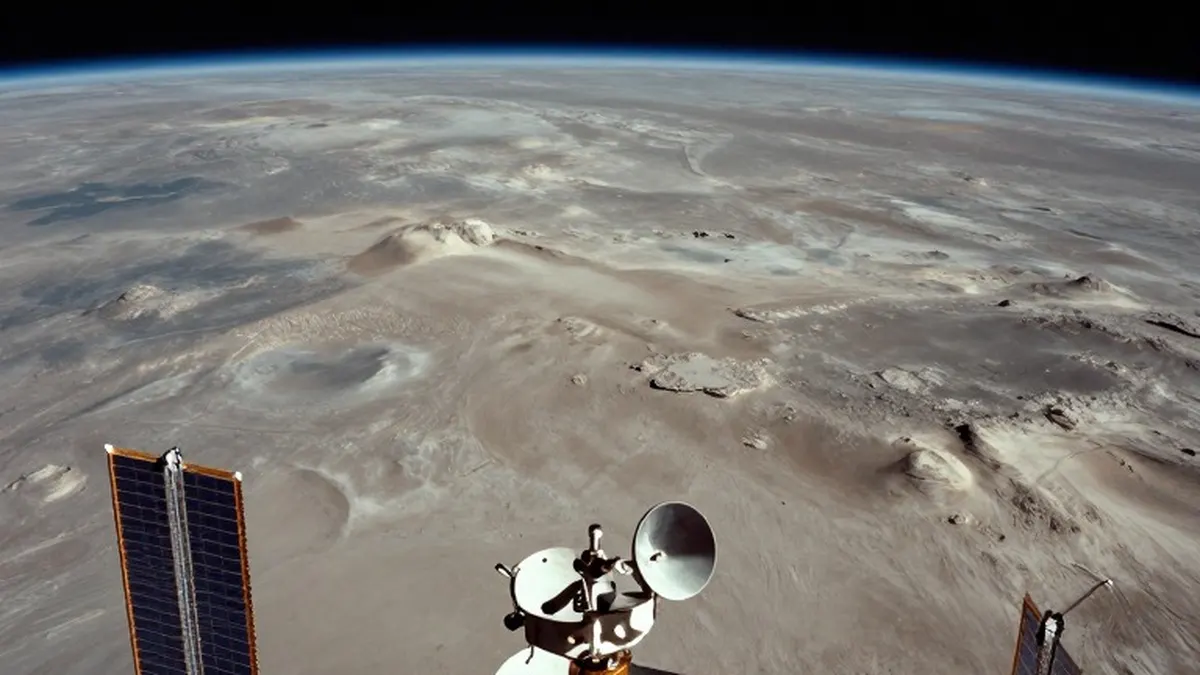
A joint robotic mission consisting of two linked spacecraft has successfully entered orbit around Mercury. The achievement marks the end of an eight-year journey through the inner solar system, designed to explore the mysteries of the Sun's closest planet. The spacecraft, known collectively as BepiColombo, achieved this milestone on Saturday following a complex series of maneuvers.
The mission is a collaboration between the European Space Agency and the Japan Aerospace Exploration Agency. The two robotic explorers will remain linked for the time being but are scheduled to separate next month. This separation will allow them to map and study the scorching planet from different altitudes. The total cost of the project is approximately 2 billion dollars, or 1.7 billion euros.
Flight controllers based in Germany, located 94 million miles away from the planet, confirmed the successful orbital insertion after several hours of anxious waiting. The European Space Agency announced the arrival via social media platforms. The process involved a series of thruster firings that slowed the spacecraft sufficiently for Mercury's weak gravity to capture it. Teams worked diligently to analyze the data streaming back to Earth, although additional details were not immediately released.
BepiColombo is only the third spacecraft to visit Mercury, which is barely larger than Earth's moon. It is the first to arrive in more than a decade. Previous visits include NASA's Mariner 10, which flew past the planet three times in the mid-1970s, and the Messenger spacecraft, which entered orbit in 2011 and crashed into the surface in 2015 after exhausting its fuel.
The journey to Mercury was deliberately slow and roundabout to manage the gravitational forces at play. Launched in 2018, the spacecraft performed a gravity-assist maneuver past Earth once, Venus twice, and Mercury six times. These looping paths added more than 6 billion miles to the odometer. The conjoined spacecraft separated from their mother ship in September to begin the final leg of the trip.
Lead project scientist Geraint Jones expressed excitement about the new data that will begin streaming in during the spring. He noted that the mission offers the unique ability to compare unprecedented measurements taken by two spacecraft at the same location. This dual perspective is expected to provide a comprehensive view of the planet's characteristics.
Once in separate orbits, the two satellites will investigate Mercury's dense interior and its exterior magnetic field. They will also examine surface features such as impact craters, volcanic plains, and mountain ridges. Some of these peaks jut out as high as 3 miles above the surface. The extreme environment poses significant challenges, with temperatures on the planet exceeding 800 degrees Fahrenheit.
Space agency officials aim to keep the mission operational for at least one Earth year, which is equivalent to four Mercury years. The intense heat places considerable strain on the electronic and engineering systems of the spacecraft. Jones highlighted that keeping the instruments cool is a major technical challenge for the team.
Despite being relatively close to Earth, Mercury remains one of the least explored planets in the solar system. Only the outer planets Uranus and Neptune have received fewer visits, with each having been explored by a single Voyager spacecraft in the 1980s. This new mission is expected to fill in many of the gaps in our understanding of this distant world.
More News · National news · Report a business · Got a Story?