Lebanese families face severe destruction as Israeli forces withdraw from southern villages
Families in southern Lebanon are returning to severely damaged homes as part of a U.S. brokered withdrawal plan, facing challenges from destroyed infrastructure and lingering tensions.
By Yasmin Parker ·
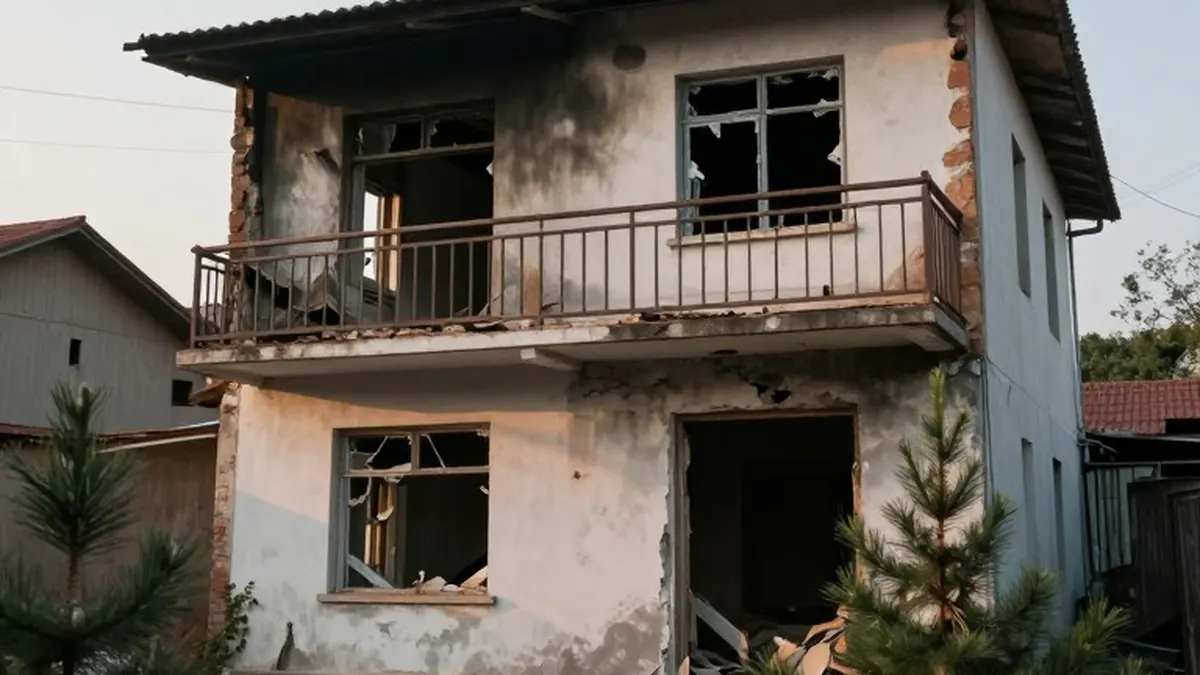
Families in southern Lebanon are returning to their homes to find extensive damage as the Israeli military pulls back from the region. The Kadouh family in Zawtar al-Gharbiyah, who lived in their home for four decades, recently returned to find that Israeli soldiers had occupied the property before setting it on fire. The house now features scorched walls, shattered windows, and bullet holes in appliances that were destroyed or pushed over the balcony.
The family’s return follows a U.S. brokered plan for Israeli forces to withdraw and the Lebanese army to take over the area. This initiative aims to keep Iran-backed Hezbollah out of the border zone after the militant group began firing rockets in solidarity with Hamas following the surprise attack on southern Israel in October 2023. Israel responded with air strikes and a ground invasion, and its defense minister has acknowledged destroying more than 20,000 homes in a self-declared security zone.
Tragedy struck the Kadouh family earlier this year when their youngest son, Adel, was killed in a drone strike on March 28. Adel, a sports teacher and basketball champion, had volunteered as an ambulance driver. He and four other medics were hit while burying a 75-year-old man who had died in the hospital. His father, Atef Kadouh, expressed deep grief, noting that his son was not a fighter but a paramedic rescuing wounded people and children.
Lebanon's Health Ministry reports that Israel has killed more than 135 first responders and medical staff in the past two years. In response to the airstrike, the Israeli military stated that militants often pose as paramedics and transport weapons in ambulances for Hezbollah and its allies. However, the military did not respond to follow-up questions highlighting that the five victims were killed at a burial site rather than in an ambulance.
Upon returning to the village in July, the family found that Israeli soldiers had written names in Hebrew on the walls and left behind burned food packets and energy drinks. The Lebanese army informed them that many houses in the area had been rigged with explosives, which the army subsequently dismantled. The Israeli army stated that its policy bars burning homes or leaving explosives but did not reply to specific queries about the damage to the Kadouh residence.
The destruction extended beyond the house to the surrounding land. The family’s pine trees, which yield a prized cash crop of pine nuts, were uprooted by bulldozers. Other fruit trees, including olive, fig, and avocado varieties, were also destroyed. Atef Kadouh described the loss of the trees as particularly painful, saying he had tended to them like small children. His wife, Soumaya Yaghi, noted that they are starting from scratch after decades of hard work and education for their children.
The household currently lacks running water and electricity, as the solar panels were destroyed. Despite the ceasefire, smoke continues to rise from nearby villages where attacks persist. Villagers feel abandoned by their own government and other political parties, which urge them to return without providing essential services. Kadouh noted that while the Lebanese army is underequipped compared to Israel, it has not been deployed to protect the village, leaving a vacuum that political factions have historically filled.
The family maintains a strong connection to their land, which they view as a paradise. Yaghi described the land as central to their life, stating that even if they were to die in their homes, it would be better than living outside. Kadouh expressed skepticism about achieving peace in his lifetime, particularly under Israeli Prime Minister Benjamin Netanyahu, whom he believes killed his son. He questioned the logic of shaking hands with those who have burned their home, emphasizing that neighbors should treat each other with good faith.
More News · National news · Report a business · Got a Story?