Berlin arts complex apologizes after military AI launch sparks backlash
Kraftwerk Berlin has issued an apology following intense criticism over an event promoting a new AI targeting system from German arms startup Helsing.
By Daniela Kelly ·
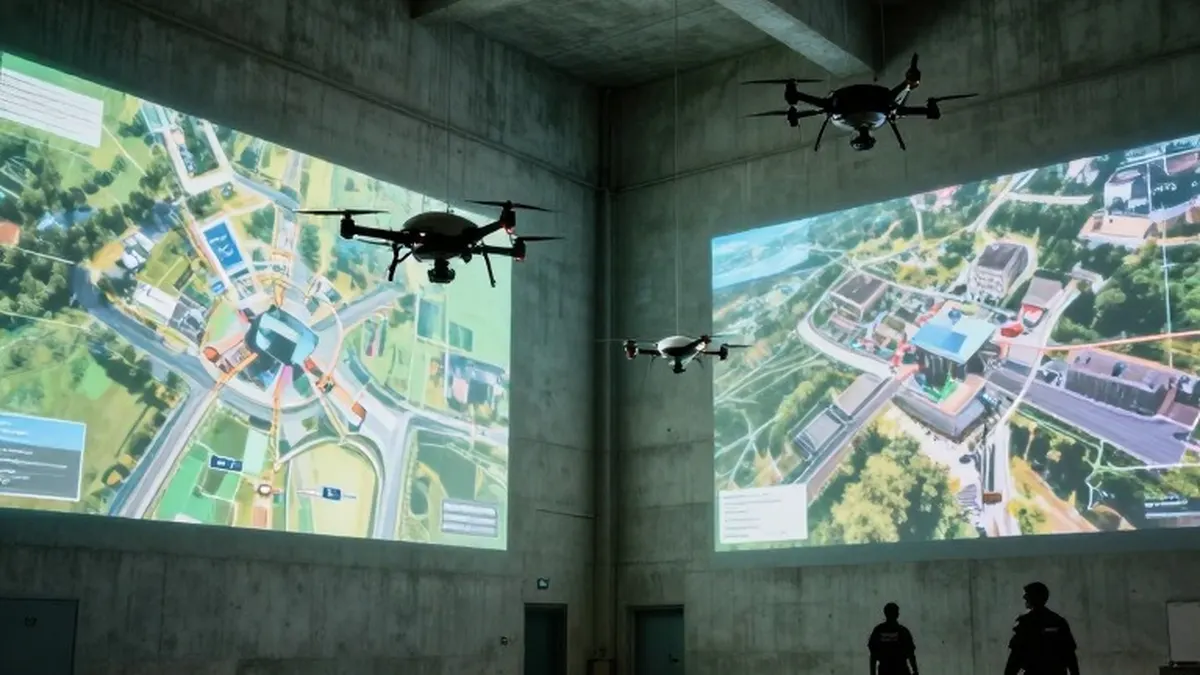
Kraftwerk Berlin has acknowledged a serious error of judgment after hosting a launch event for a military artificial intelligence system within its central hall. The venue, a renowned institution in the city's nightlife scene, transformed its space into a setting described by attendees as resembling a war room. The incident has triggered widespread debate regarding the intersection of Berlin's techno culture and the growing militarization of European security.
The event took place on November 11 and marked the unveiling of Clarity, an AI targeting platform developed by Helsing, a Munich-based arms startup. Visitors to the venue reported seeing concrete walls covered in projected maps and aerial footage, while drones hung from the ceiling. Security personnel in flak jackets patrolled the area with sniffer dogs, creating an atmosphere that many described as excessively dystopian even for fans of the city's typically bleak club aesthetic.
Kraftwerk Berlin, which is part of the same complex as the famous techno club Tresor, stated that it had revised the booking policy of its commercial rental department. The apology came after outrage spread through the local music community, highlighting tensions between the commercialization of historic venues and the sector's traditional pacifist stance amidst rising security threats in Europe.
Helsing, which was founded in 2021, lists Daniel Ek, co-founder of Spotify, among its investors and board co-chairs. The company describes Clarity as an agentic intelligence platform that utilizes data from drones, satellites, and sensors to identify targets. While the system is designed to find objects such as radar systems and ships, the company noted that its agents also look for patterns of behavior. Helsing asserts that human operators remain responsible for approving strikes and that the technology is built and controlled in Europe.
The launch of Clarity is seen as part of a broader European effort to find alternatives to US-developed systems, such as Palantir's Maven, which has been used in US military strikes on Iran this year. France's domestic intelligence service has already moved to replace Palantir with a homegrown rival. However, this push to boost domestic arms industries is clashing with the cultural consensus in Berlin, a city where nightclubs historically served as spaces to process anxieties from the Cold War era.
Michail Stangl, a Berlin-based music curator and DJ, expressed concern that the presence of a war in Europe should not lead to a suspension of critical thinking. He argued that AI-driven targeting systems are already being used in Gaza and warned that successful systems like Clarity could eventually be sold to authoritarian regimes, domestic police forces, or organizations like Frontex for use against migrants.
Tresor, the neighboring nightclub and record label, condemned the event in a statement, declaring that a military launch had no place in the spaces built by the community. Dietmar-Maria Hegemann, the founder of Tresor and managing director of Kraftwerk Berlin, called the booking unacceptable. He explained that the decision was made by a staff member in the commercial rental department without his direct consultation, a process that has surprised some insiders given the high-security nature of the event.
The controversy highlights a changing landscape for Berlin's underground venues, which are increasingly rented out for commercial purposes. Just on October 19, Kraftwerk Berlin hosted an investment summit organized by the German government, featuring a discussion between Chancellor Friedrich Merz and Jensen Huang, the then CEO of Nvidia. In a recent Q&A, Kraftwerk Berlin noted that it had previously declined a proposed event sponsored by Palantir in 2022 after consulting with its cultural teams.
Defenders of such commercial partnerships point to the financial struggles facing many Berlin nightclubs, including rising rents and decreasing bar revenues. However, Kraftwerk Berlin is not considered one of the venues in immediate financial distress. The total assets of its operating company, Schaltraum Berlin, were reported in June to be valued at 4.3 million euros.
The incident has left the Berlin music scene grappling with how to balance its cultural heritage with the economic and political realities of the present day. As Europe continues to reassess its defense capabilities, the role of cultural spaces in hosting such initiatives remains a subject of intense scrutiny and discussion.