Rescue efforts intensify in Kyiv region after drone strike kills two and traps residents
Heavy machinery and search dogs work through the rubble of a damaged apartment building in Dymer as officials warn that up to 11 people may still be buried.
By Amir Shah ·
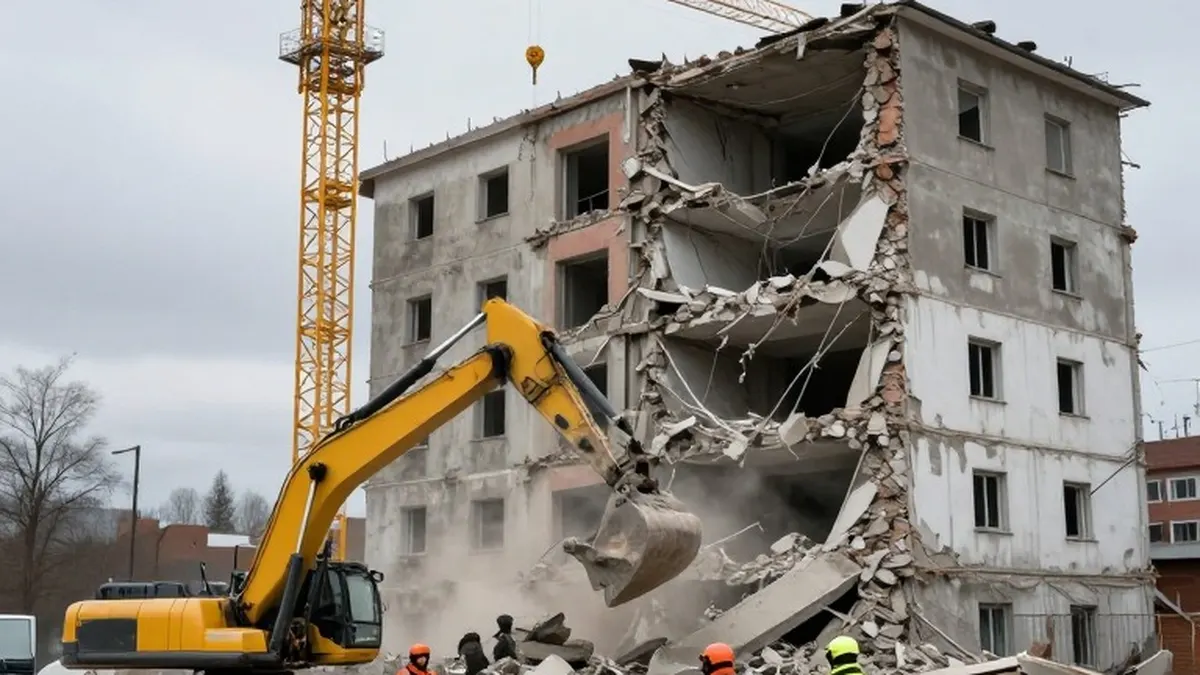
Rescue teams in the town of Dymer, located approximately 45 kilometers north of Kyiv, pulled a second body from the debris of an apartment building damaged by a Russian drone attack on the morning of November 22. Ukrainian officials stated that as many as 11 additional individuals may remain trapped beneath the rubble. The strike represents the latest in a series of attacks on civilian infrastructure aimed at degrading Ukraine's power and heating systems before the start of a fourth full winter of war.
As temperatures hovered just above freezing, relatives and neighbors gathered to watch heavy equipment lift chunks of concrete. Searchers accompanied by rescue dogs combed through the wreckage in an effort to locate any remaining survivors. The scene captured the urgency of the situation as families waited for news about their missing loved ones.
One resident, who identified himself only as Mykola, spoke to RFE/RL’s Ukrainian Service about the personal toll of the attack. He described the frantic attempts by his family to reach his daughter, Yulia, who was feared to be buried in the debris. Yulia was scheduled to celebrate her 35th birthday on the same day as the strike.
The attack in the Kyiv region was part of a broader wave of Russian strikes. In the Dnipropetrovsk region, Ukrainian authorities confirmed that Russian drones or missiles hit a power substation. These strikes are part of a sustained campaign by Moscow to target civilian infrastructure, with Kyiv authorities repeatedly requesting more missile interceptors from Western allies to protect key assets.
On the front lines, Russian forces continue to advance slowly in Ukraine’s Donbas region, gaining only small amounts of territory. However, these gains come at a significant cost, with many estimates placing Russian casualties in excess of 1.6 million dead and wounded. Ukrainian troops are also facing heavy losses, with casualties estimated to be above 500,000.
Beyond the battlefield, Russia has increased its production of drones and missiles, launching near-daily barrages at Ukrainian targets. There are growing concerns in Kyiv regarding the targeting of the main bridges over the Dnieper River, which could potentially cut the capital in two if damaged sufficiently.
In response, Ukraine has intensified its own drone campaign against targets inside Russia. Strikes have focused on oil refineries, pipelines, data centers, and major e-commerce platforms such as Wildberries and Ozon. These operations have also extended to the northwestern Leningrad region, which hosts naval ports and oil export terminals.
The conflict has also impacted Russian business leaders. Tatyana Kim, the founder and chief executive of Wildberries, announced on November 21 that she was stepping down from her position. This decision came just days after the European Union imposed financial sanctions on her. Kim, one of Russia's wealthiest individuals, is believed to have strong support from the Kremlin. She was replaced by the CEO of a digital advertising company affiliated with Wildberries.
Maritime logistics have also been affected by the ongoing war. A Russian cargo ship bound for the Baltic Sea exclave of Kaliningrad was hit by a Ukrainian drone on November 21. The vessel, owned by the Russian shipping company Oboronlogistika which provides logistics to the Russian Defense Ministry, was set ablaze and disabled. Finnish coast guard officials reported that the ship was still burning when it drifted into Finnish waters.
The combination of ground warfare, aerial strikes, and economic disruption highlights the expanding scope of the conflict as both nations seek to weaken each other's capabilities heading into the winter months.