Music becomes a central force in French youth-led protests
Reporters explore how musicians are using their art to amplify the demands of demonstrators in recent French street movements.
By Daniela Kelly ·
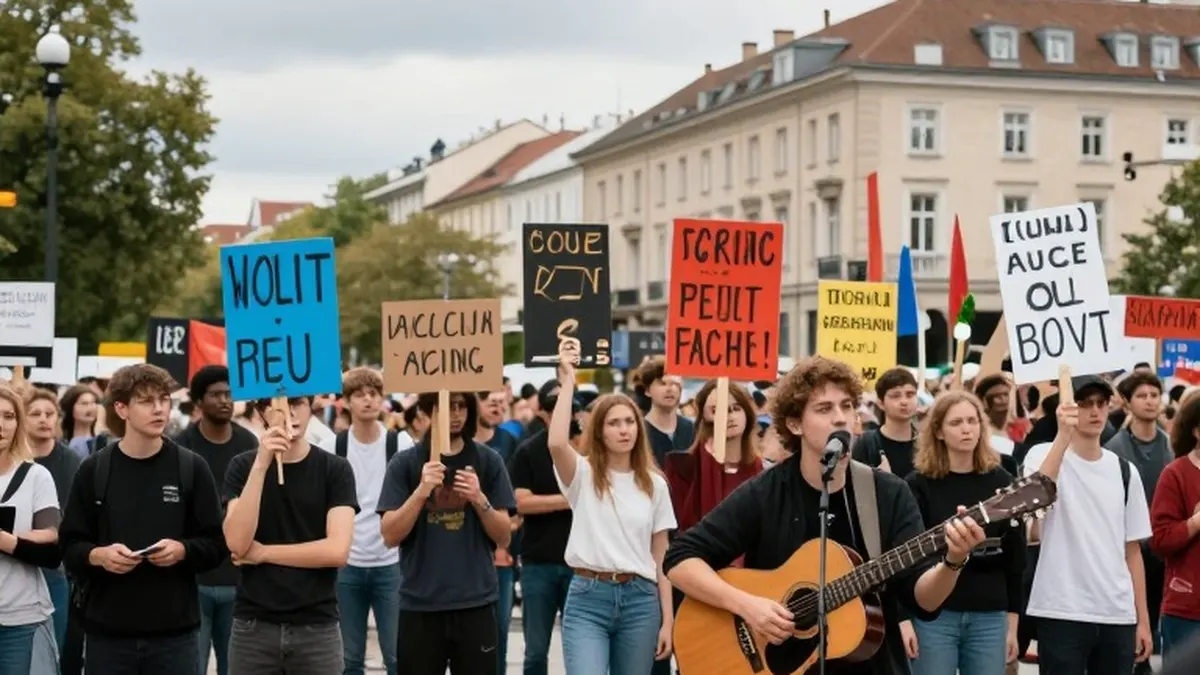
Protest songs have long served as a unifying force in social movements, cutting across musical genres to rally communities against war, racism, inequality, and established power structures. This historical tradition is being vividly renewed in France, where music is playing a significant role in the current wave of youth-led demonstrations.
The integration of music into these recent protests highlights a broader trend where artistic expression becomes a primary tool for political communication. By taking to the streets, musicians are not merely performing but are actively participating in the civic dialogue, using their voices to articulate the specific demands of the protesters.
Journalists from France 24 traveled to the scene to document this cultural phenomenon. Their reporting focused on meeting the individual artists who are channeling the energy of the demonstrations into their work. These encounters provided insight into how personal artistic vision intersects with collective political urgency.
The choice of music as a vehicle for protest is deliberate. It allows for an emotional connection that speeches and slogans may not always achieve. In the context of the French demonstrations, the songs serve to solidify the identity of the movement, offering a soundtrack to the struggle for change and helping to maintain morale among participants.
The musicians featured in the report represent a cross-section of the French music scene. They are using their platforms to give voice to a generation that feels increasingly disconnected from traditional political institutions. Their lyrics and performances reflect the frustrations and hopes of the young people leading these protests.
This cultural dimension adds a layer of complexity to the political narrative surrounding the demonstrations. It suggests that the movement is not solely driven by policy grievances but is also a cultural awakening. The music helps to bridge gaps between different groups of protesters, fostering a sense of solidarity and shared purpose.
As the protests continue, the role of music is likely to remain prominent. Artists are finding new ways to engage with the movement, from live performances at demonstration sites to the release of new tracks specifically composed for the occasion. This ongoing creative output ensures that the message of the protests remains dynamic and relevant.
The interplay between music and protest in France echoes similar trends seen in other parts of the world. However, the local context gives these songs a distinct character, rooted in the specific historical and social fabric of French society. The artists are drawing on this heritage while pushing it forward into the future.
The reporting underscores the importance of cultural engagement in political movements. By highlighting the contributions of these musicians, the coverage reminds viewers that art has always been a powerful catalyst for social change. The current demonstrations in France are a testament to this enduring power.
As the movement evolves, the songs created during this period may become part of the historical record. They will serve as a reminder of the voices that spoke out during this time of social upheaval. The music will continue to resonate, reminding future generations of the struggles and aspirations of the present day.