France enters sixth week of nationwide protests over cost of living
Tens of thousands are expected to join demonstrations in Paris and across Europe as social unrest intensifies ahead of the presidential election.
By Daniela Kelly ·
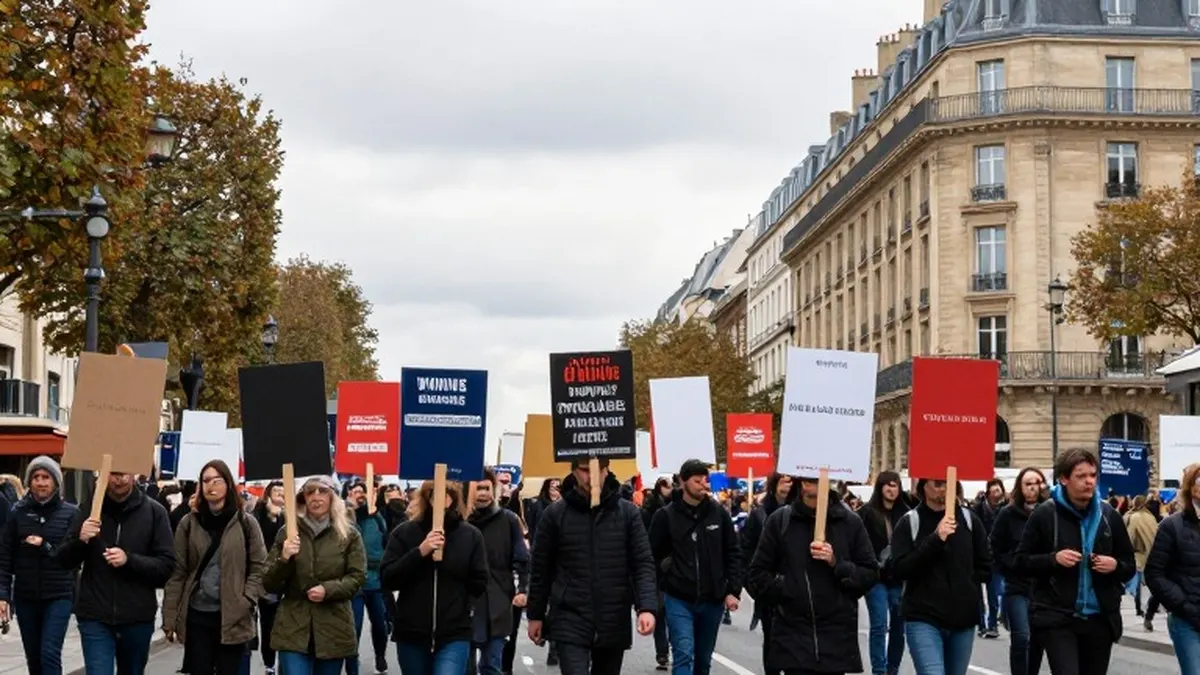
Demonstrators across France took to the streets on Saturday for the sixth consecutive week, continuing a series of rallies driven by concerns over the rising cost of living and the government's management of ongoing social unrest. These protests occur at a critical time, with the national presidential election scheduled for next year. The movement has gained momentum, drawing participants from various sectors of society who are demanding more attention to economic pressures.
In Paris, police authorities have authorized a major march organized by labor unions and youth groups. The demonstration is set to begin at 2pm local time from Place de la République. The route is planned to pass through the third, tenth, eleventh, and twelfth arrondissements before concluding at Place de la Nation. This specific route was selected to maximize visibility while allowing for a large turnout in the city center.
A police source told the French broadcaster BFM TV that between 15,000 and 30,000 demonstrators are expected to participate in the Paris march. To manage the event, approximately 70,000 police officers and gendarmes have been deployed nationwide. These forces are tasked with overseeing between 50 and 60 planned marches across the country, ensuring the safety of both protesters and the general public.
Security measures have been heightened in and around Paris in anticipation of the events. The police prefecture stated on social media that increased security checks are being conducted at train stations and on public transport. These measures aim to pre-empt any risks of public disorder and ensure the safety of passengers as they travel to and from the demonstration sites.
The French protests are part of a broader wave of demonstrations sweeping across Europe. On the preceding Friday, youth and worker-led marches took place in more than 20 European countries, including Spain, Portugal, Greece, and Germany. These international rallies focused on shared grievances such as the cost of living, worsening education conditions, the climate crisis, and the impact of global conflicts. In some cities, the demonstrations disrupted schools and public services, and reports of clashes between demonstrators and police emerged.
French rent rights organizations have joined the current wave of protests, adding a pan-European dimension to the movement. A call to protest was co-signed by these groups, echoing sentiments in seven different European countries. Housing access has become a top concern alongside general economic inflation, linking the French experience to similar struggles in neighboring nations.
Music has emerged as a significant element of these youth-led demonstrations. Musicians are using their platforms to voice the demands of the protesters, continuing a long history of protest songs that rally people against inequality and establishment policies. This cultural aspect has helped to unify participants across different genres and backgrounds, fostering a sense of community among the demonstrators.
Political parties have also weighed in on the situation. The hard-left party France Unbowed, known in French as La France Insoumise, urged demonstrators to maintain pressure on the government. In a social media post, the party stated that the fight continues due to a lack of response from authorities. They called for large turnout from young people and trade unions to ensure their demands are heard.
The scale of the current protests builds on previous weeks of activity. Last Saturday, the interior ministry reported that around 146,000 people protested across France, with 24,000 in Paris. However, the CGT union claimed much higher numbers, stating that 500,000 people participated, including 175,000 in the capital. The Yellow Vests, whose separate march proposal was rejected, have announced they will join the main union route for their sixth consecutive Saturday of action.
As the demonstrations proceed, the focus remains on whether the sustained pressure from the streets will influence government policy before the upcoming election. With public transport and daily life potentially affected, the outcomes of these rallies could shape the political landscape in France and across the continent.