Lebanese President Aoun Demands Israeli Withdrawal and Criticizes Iranian Influence
In a speech marking the 83rd anniversary of independence, President Joseph Aoun called for an end to Iranian interference and insisted that Israeli forces withdraw from southern Lebanon.
By Daniela Kelly ·
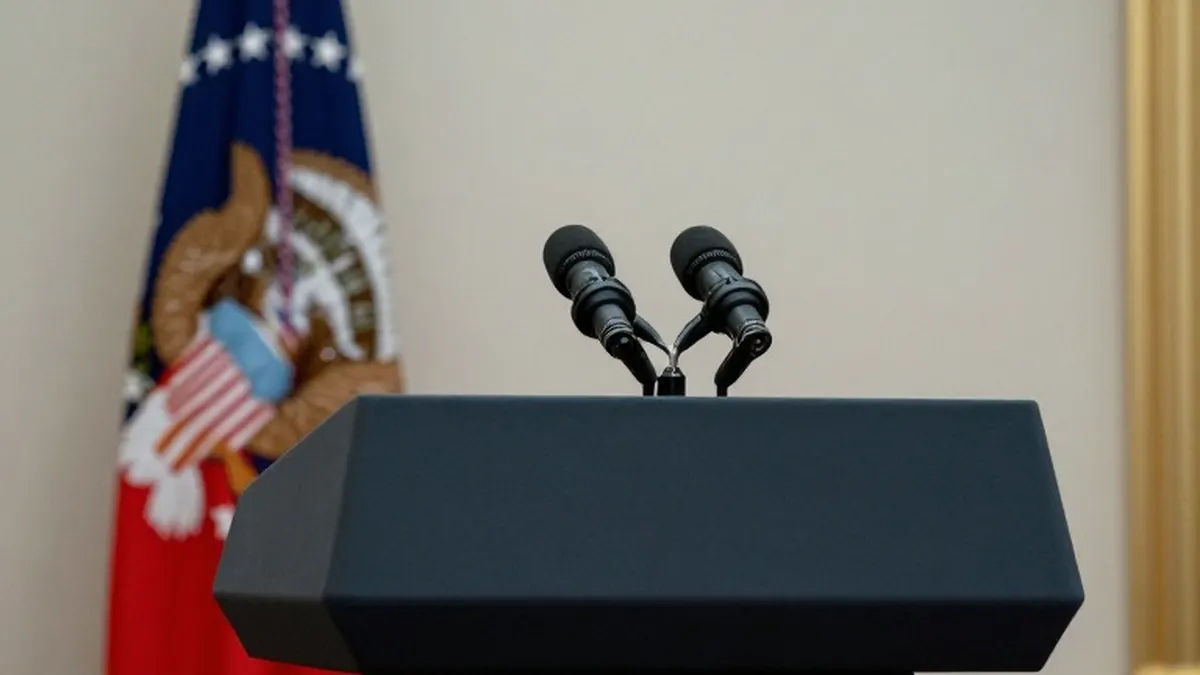
Lebanese President Joseph Aoun delivered a detailed critique of Iran during a speech on the eve of the 83rd anniversary of Lebanon's independence from France. He argued that the Islamic Republic has no right to interfere in Lebanon's internal affairs, a role it has long played through its support for the local militant group Hezbollah.
Addressing those he described as responsible for Iranian interference, Aoun stated that Lebanon respects the Iranian people and their civilization. He expressed a desire for relations based on friendship and mutual respect, similar to those Lebanon seeks with other nations. However, he emphasized that such friendship does not grant one country the authority to dictate the decisions of another.
"What you do not accept for your own country," Aoun said, "do not ask Lebanon to accept for its country." He used this phrase to underscore his argument against external influence in Lebanese political and military matters.
The political tension has been heightened by recent conflicts. Hezbollah, which possesses an arsenal that has historically exceeded that of the national army, pulled Lebanon into a war with Iran on March 2 in support of its patrons. This action triggered significant Israeli airstrikes and a subsequent ground invasion of southern Lebanon. Although an agreement to end the conflict was reached in June, sporadic fighting has persisted since then.
Negotiations have faced difficulties primarily due to Hezbollah's refusal to comply with the terms of the deal. The agreement requires the Israel Defense Forces to withdraw from areas in southern Lebanon held in parallel with the deployment of the Lebanese army. This process is to begin in designated pilot zones, provided that Hezbollah disarms. Despite heavy pressure from non-Shiite leaders in Lebanon and international actors, the group has resisted disarming.
Aoun noted that Hezbollah has been significantly weakened by its recent wars with Israel since 2023. In his address, he identified two main challenges facing the nation: Israeli occupation and Iranian interference. He specifically criticized the backing of weapons held outside the authority of the state, a term used to describe Hezbollah, which has resisted United Nations mandates for disarmament for decades.
"The era of weapons outside the state is over," Aoun declared. While acknowledging that such private militias had been useful in the past, he argued that they have since exhausted the people, the community, and the nation. He stated that these groups inflicted heavy losses and became devoted to non-Lebanese causes, necessitating the handover of their weapons.
The President promised that once the disarmament process is complete, there would be no persecution, revenge, or retribution. He also addressed the situation with Israel, lamenting a campaign by Israeli forces calling for continued occupation. He urged Israel to withdraw from every inch of Lebanese territory, stop its attacks, and return captives.
Israeli forces are currently operating in a self-declared security zone in southern Lebanon that runs approximately 10 kilometers deep along the border. The army continues to conduct strikes, shelling, and detonations in the area. Aoun rejected the notion that continued occupation and the use of force could ensure security, stating that occupation does not create security and destruction does not create peace.
He concluded by stressing that withdrawal is the only reliable path to establishing security and stability along the internationally recognized southern border. He described this step as essential for fostering peace in the region and moving toward a just and lasting peace.