Community Garden in German Colony Serves as Central Hub for Jerusalem Greening
A volunteer-managed garden in Jerusalem's German Colony acts as a central hub for citywide urban agriculture, offering resources, cultural events, and a space for community building amidst ongoing construction.
By Yasmin Parker ·
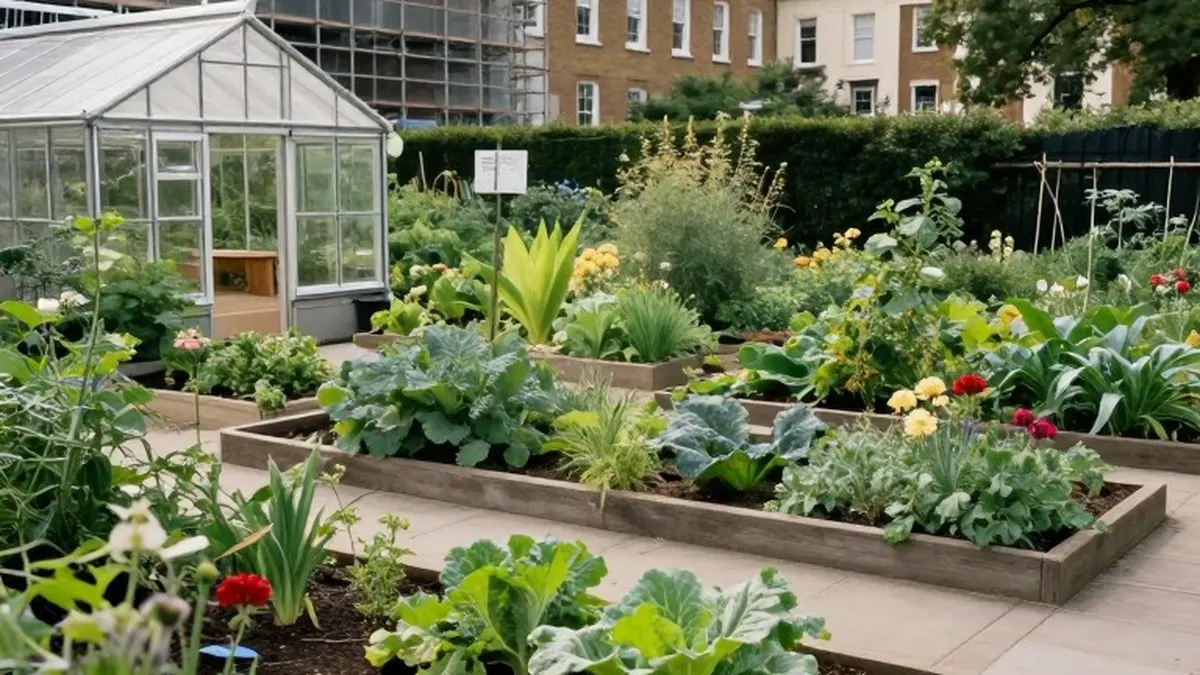
A volunteer-run green space in Jerusalem's German Colony has become a central hub for the city's urban gardening movement. Located next to the Natural History Museum, the garden covers approximately 0.45 hectares and functions as a primary resource center for roughly 50 other community gardens across the city. Municipal agricultural coordinator Avinoam Kahn described the site as the mother ship for local growers, noting that residents visit weekly to collect plants, tools, compost, and advice on irrigation and planting techniques.
Beyond its agricultural role, the garden operates as a cultural and leisure destination. The grounds feature shaded seating areas, historic ornamental pools filled with goldfish, and a lending library for books and gardening equipment. Additional facilities include a children's play area, a woodworking shop, a plant nursery, and a studio where volunteer artist Naomi Lachish creates works displayed throughout the space. The site hosts a variety of events, including lectures, craft workshops, and musical performances, serving visitors of all ages.
The garden's current form is the result of significant effort by volunteers Dena Maltinsky and Amnon Herzig. Maltinsky, a retired environmental program coordinator from Montreal, noted that the site was a garbage dump until two decades ago. It originally formed part of an estate built in the 19th century by Armenian opium dealer Lazarus Paul Margharian. In 2005, Herzig, a retired banker, partnered with late neighbor Ora Ron to prevent real estate developers from taking over the property. Together with other residents, they transformed the neglected land into a showcase garden.
Vera Schwarcz, a retired professor of East Asian history who moved to Jerusalem from Connecticut, documented this transformation in her book, Treasure in Plain Sight: Growing Community through a Garden in Jerusalem. Schwarcz, who lives next door, volunteers at the garden every Thursday afternoon. She described Herzig as a skilled organizer who nurtures both the soil and the community. She often brings homemade Szechuan tofu to share with fellow volunteers during their weekly work sessions.
The garden's volunteer base is diverse, ranging from students in their 20s to residents in their 80s. Kahn, 31, who moved to Israel from Minnesota as a teenager, supervises volunteers in tasks such as preparing sage seedlings. He pointed out that the sage variety being cultivated is native to the Jerusalem mountains but is currently on the brink of extinction. Hundreds of fruit tree saplings, selected for hardiness and flavor, are also propagated at the site for distribution to other gardens.
Gadi Warszawski, the head agriculture coordinator for the municipality's Community Gardens and Social Sustainability Unit, referred to the site as a base camp for bringing nature to urban communities. He emphasized the importance of preserving local plant species and integrating green spaces into a rapidly growing city. However, the project faces challenges regarding labor. Maltinsky noted that the number of active gardens has declined over the past decade as many founding seniors can no longer manage the workload. She called for younger volunteers and engagement from neighborhood schools to sustain the effort.
Kahn acknowledged the need for more working hands, stating that increased participation leads to more beautiful gardens and more green lungs for the city. Despite the labor shortfall, the garden remains a place of respite from the noise of the city. Currently, the site is somewhat hidden by construction, accessible via a gate on Hamagid Street. Once museum renovations are complete, a new coffee shop on the grounds is expected to provide easier access to the public.
The garden's website, updated weekly, lists planned events and information for those interested in volunteering. For Schwarcz, the site represents a unique laboratory for personal growth and community building. She described an invisible smile that flutters over the grounds, reflecting the dedication of neighbors who have maintained ancient pathways with new purpose.