New Study Reveals 3,000-Year-Old Natufian Clay Figurines in Israel
Archaeologists have identified 154 clay objects from Natufian sites, pushing back the history of figurine making in Southwest Asia by several millennia.
By Yasmin Parker ·
A new study has significantly altered the understanding of artistic traditions in Southwest Asia. Researchers have determined that Natufian clay figurines found across Israel predate the region's established timeline for such artifacts by as much as 3,000 years. This finding suggests that the practice of shaping clay into figures began far earlier than previously thought.
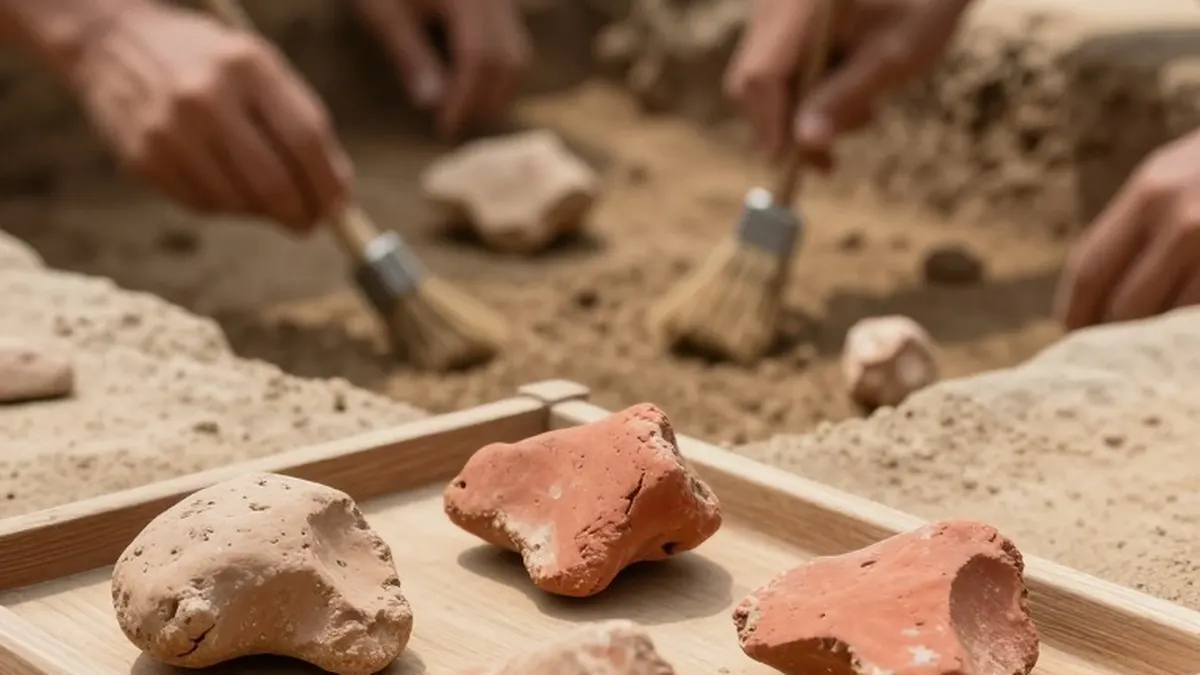
The study, conducted by researchers from the Hebrew University of Jerusalem, focused on 154 clay objects. These items were unearthed at three specific archaeological locations. The sites include Eynan-Mallaha in the Upper Jordan Valley, the Hayonim Terrace in the Galilee, and the el-Wad Terrace on Mount Carmel. Most of the discovered items are cylindrical fragments, which scientists believe were once parts of larger figures. Fifteen of the objects remain recognizable in their current state.
The Natufians inhabited the Levant region between roughly 15,000 and 11,650 years ago. They are recognized as the first people in Southwest Asia to establish permanent or semi-permanent settlements. By re-examining clay fragments that had been previously overlooked, the research team identified signs of deliberate artistic work. These signs include fingerprints, tool marks, and traces of pigment.
Dr. Laurent Davin, who led the study alongside Prof. Leore Grosman and Prof. Anna Belfer-Cohen, noted that these discoveries change how scholars view the origins of artistic expression in the area. He stated that people were using clay to create figures thousands of years before the emergence of agriculture. These figures likely reflected the beliefs and knowledge of the natural world held by early communities.
One of the most striking aspects of the research involves the creators of the figurines. Microscopic analysis of fingerprints preserved in the clay revealed that both adults and children participated in the process. Some impressions belonged to children who were likely under the age of 10. On one human-shaped figurine, researchers found two overlapping marks. One was left by a young adult or adult woman, while the other was made by a child who had not yet reached puberty.
The presence of children's fingerprints suggests that young people were actively involved in shaping and decorating the objects. This involvement may have served as a method for passing on skills and cultural knowledge between generations. Davin highlighted that the evidence of children's participation is particularly fascinating, indicating that creativity was shared across different age groups in prehistoric societies.
The identifiable figurines primarily depict animals. Eleven of the fifteen recognizable pieces show birds. The remaining items include a mammal, a gazelle, and two human forms. Some birds are rendered as simple shapes, while others feature detailed wings, tails, and feathers. Several appear to be waterfowl, while others may represent birds of prey.
Researchers observed that some bird figurines have their heads tilted downward and turned to the left. This posture is believed to represent the courtship displays of ducks during the breeding season. If this interpretation is correct, the figurines may have served functions beyond simple decoration. They could have been used to convey knowledge about animal behavior and seasonal changes, potentially playing a role in storytelling.
The study also uncovered evidence of coloring techniques on several figurines. Traces of red pigment were found, including examples of engobe. Engobe involves applying a thin layer of colored clay to the surface. One figurine, dated to 15,000 years ago, provides the earliest known evidence of this specific technique. The research was a collaborative effort involving experts from the Hebrew University, the University of Haifa, the Israel Antiquities Authority, and the Center de recherche français à Jérusalem.
The findings offer a deeper insight into the cultural lives of the Natufians. By analyzing the physical marks left on the clay, scientists have gained rare information about how prehistoric communities interacted and shared their artistic traditions. The discovery reinforces the idea that complex cultural practices were well established long before the agricultural revolution.