Israel Police Targets Early 2027 for New Average Speed Camera System
Israel Police aims to deploy average speed cameras on 125 road sections by the first quarter of 2027, marking a shift from single-point speed monitoring to continuous speed enforcement.
By Daniela Kelly ·
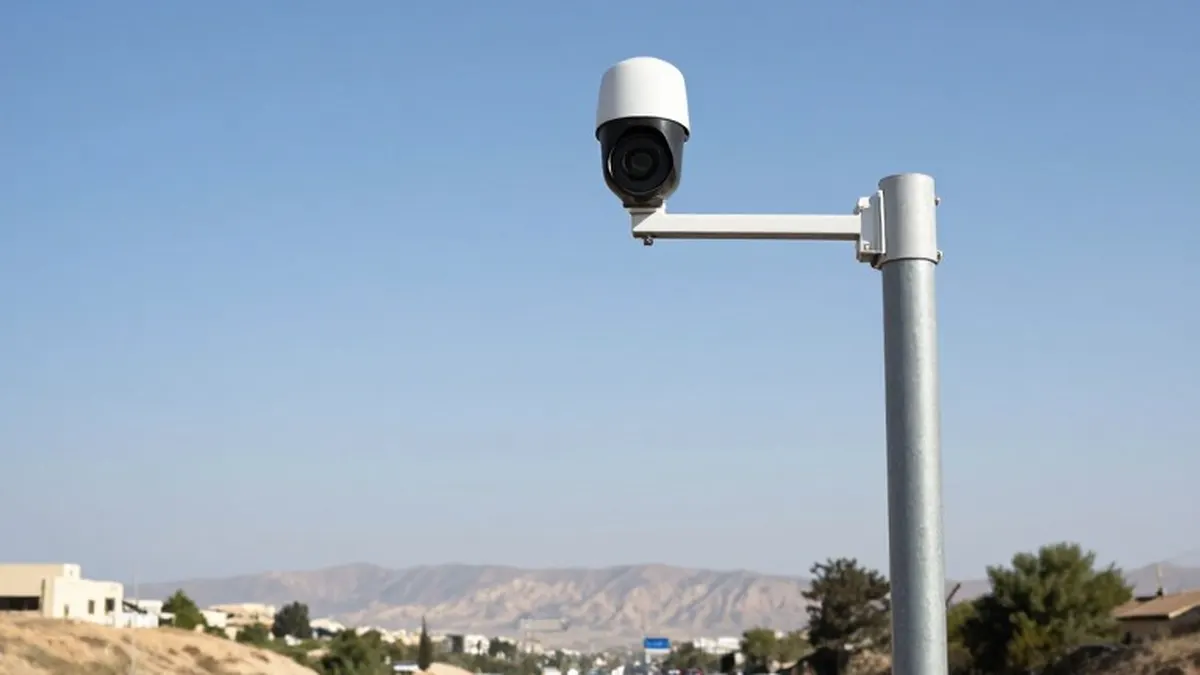
Israel Police has identified the first quarter of 2027 as the primary target for launching a new generation of average speed enforcement cameras. This initiative follows a period of extensive preparation and previous delays, occurring as the country's current network of fixed and mobile speed cameras is gradually retired. While the timeline is established, the rollout date remains provisional. It is contingent upon the completion of regulatory approval processes and the successful demonstration of the new system's reliability. Consequently, the launch could potentially be postponed by several months if these conditions are not met promptly.
The new enforcement technology operates on a fundamentally different principle than the existing infrastructure. Current A3 fixed speed cameras, along with mobile laser and radar devices, measure a vehicle's speed at a single specific point. This method often allows attentive drivers to identify cameras in advance and reduce their speed just before the enforcement point. Additionally, drivers may receive fines for briefly exceeding the limit on downhill sections, even if they maintained legal speeds for the remainder of their trip.
In contrast, the proposed system will calculate a vehicle's average speed over a designated stretch of road. The cameras are designed to photograph vehicles upon their entry into and exit from the monitored section. The system then computes the average speed by dividing the distance traveled by the time taken to complete the journey. This approach is considered significantly simpler than the complex measurement systems currently used by A3 cameras.
The National Road Safety Authority and Israel Police have developed a comprehensive plan to install these average speed cameras along 125 road sections across the country. The length of each monitored section will vary based on specific road conditions. Some sections will be only several hundred meters long, while others on suitable intercity roads, including the Arava Highway, will stretch between three and five kilometers.
Drivers entering an enforcement zone will encounter warning signs. However, there will be no signage indicating where the monitored section ends. This design means that motorists will not necessarily know when the average speed calculation has been completed. Fines for speeding violations under this new system will be mailed directly to the drivers' homes.
This expansion of traffic enforcement is part of a broader strategy to reduce road fatalities. Since the beginning of the year, the National Road Safety Authority and the Israel Police Traffic Division have operated an expanded program targeting dangerous driving offenses. The initiative focuses on a range of violations, including speeding, mobile phone use while driving, aggressive driving, failure to yield, crossing solid white lines, running red lights, drunk driving, and driving without a valid license.
According to data from the National Road Safety Authority, this enforcement campaign has coincided with an 11% decrease in the number of people killed in urban traffic accidents. The total number of urban fatalities has dropped to 139. In contrast, fatalities on roads outside urban areas have increased by 1%, reaching a total of 245 deaths.
The current enforcement initiative, which is funded by the National Road Safety Authority at a cost of 37 million shekels, has added 199 leased patrol vehicles to the Israel Police Traffic Division. Following the reported reduction in urban road fatalities, the police plan to finance the continuation of this program through May 2027 using their own budget.
The introduction of average speed cameras represents a significant shift in how Israel monitors driving speeds. By moving from monitoring speeding at individual locations to measuring speeds over longer distances, the authorities aim to create a more consistent and effective enforcement environment. This change is expected to complement the existing expanded traffic enforcement program and contribute to further improvements in road safety nationwide.