Incoming US Speaker signals plan to legislate against West Bank settler violence
US House Speaker-elect Hakeem Jeffries has outlined a strategy to introduce legislation targeting settler violence, prompting renewed scrutiny of enforcement efforts in the West Bank.
By Daniela Kelly ·
Incoming US House Speaker Hakeem Jeffries stated in a recent interview with The New York Times that moving the West Bank Settler Violence Protection and Prevention Act should be a top priority within his first one hundred days in office. He noted that the bill, which focuses specifically on settler violence, enjoys strong support within the House Democratic Caucus. His remarks suggest that the new Congress is likely to increase pressure on Israel regarding the ongoing instability in the West Bank.
For several years, incidents of violence in the region have been documented through photographs and video footage. These images often depict groups of men clashing with Palestinians in various localities. Although Israeli politicians and military officials have frequently condemned these acts, the violence has persisted. On November 22, the Israel Defense Forces and Border Police reported dispatching officers to Deir as-Sudan, Deir Abu Masha’al, Kafr Malik, and At-Tuwani. This response followed reports and footage of vehicles being set on fire and graffiti being sprayed in the area.
The military issued a statement strongly condemning such acts of violence. They noted that these incidents harm public order, divert forces from primary missions, and hinder ongoing counterterrorism activities. Other recent events include accusations that extremists attacked Israeli police in the southern West Bank on Friday. Additionally, CNN reported on Tuesday that a 72-year-old Palestinian woman, Fadda Fuhaidat, was shot and killed by Israeli settlers near Jericho. Palestinian officials and eyewitnesses stated she was shot in the head after midnight, shortly after settlers took over eight homes in the vicinity.
Prime Minister Benjamin Netanyahu has previously downplayed the scale of the issue. In December of last year, he described the perpetrators to Fox News as a handful of kids, approximately seventy in number, who are not originally from the West Bank. He characterized them as teenagers from broken homes engaged in vigilantism, such as chopping olive trees or burning homes. Despite these comments, the violence has continued, raising questions about why more individuals have not been detained and charged.
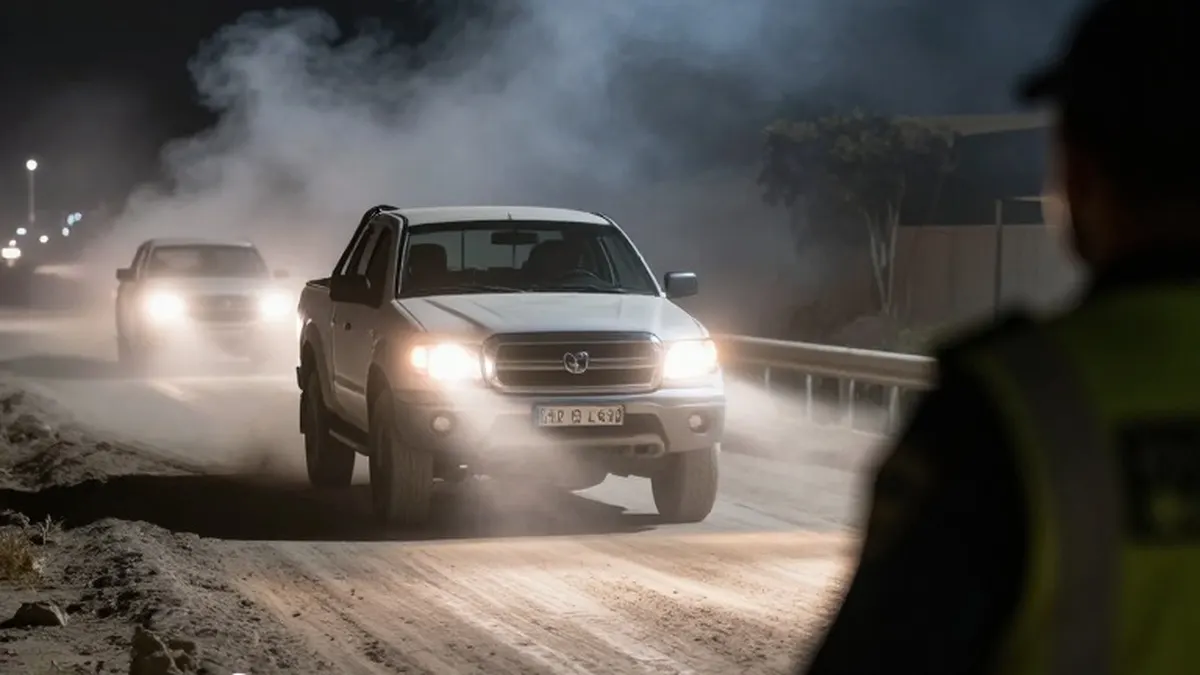
By August, Netanyahu again condemned criminal acts of violence following attacks in the villages of Qusra and Jalud. He referred to the perpetrators as a handful of rioters and claimed their actions harmed Israel’s standing in the world. Speaking at the United Nations in September, he reiterated that the culprits were juvenile delinquents. He later stated that media coverage focused on about 150 individuals who throw stones and light fires, arguing that the annual casualty count was low. However, the growth in the number of accused individuals and the frequency of video footage showing masked gangs in pickup trucks have challenged this narrative.
The use of expensive pickup trucks by these groups has raised questions among Israelis regarding how the participants obtain the vehicles and driver’s licenses. Since many observant Jews in the West Bank do not drive on Shabbat, the appearance of these trucks on the Sabbath has been particularly striking. The violence has also affected international figures. In October, Washington Post journalist Heidi Levine was attacked. President Isaac Herzog spoke with her, expressing deep sorrow and apologizing for the incident. He called on law enforcement to use every means to investigate and apprehend the lawbreakers.
Critics argue that Israel’s handling of the situation represents an unforced error that invites greater international legislative focus. While the IDF has the resources to intervene, it lacks the police powers necessary to investigate, detain, and prosecute. This creates a dilemma where authorities condemn the violence but lack a clear plan, such as a rapid reaction force, to address clashes effectively. The military did coordinate extensively during the olive harvest season, managing over 150 events to ensure a safe harvest, but friction in high-profile areas remains a concern.
Political figures in Israel have weighed in on the issue. Yashar leader Gadi Eisenkot described the night of arson in Judea and Samaria as Jewish terrorism, stating that it undermines regional stability and damages foreign relations. Knesset member Yoav Segalovitz agreed, calling the acts serious and requiring determined response. The recurring nature of the violence, often occurring on Shabbat in the same villages, suggests a predictable pattern that authorities have yet to fully resolve. The inability to effectively manage the lawlessness continues to generate pressure from abroad, potentially leading to a feedback loop where international scrutiny hardens local political positions.