Island Nations Press Antalya Talks for $700 Million in Climate Aid
Leaders from 39 small island states argue that voluntary agreements and rising sea levels require immediate financial commitment from larger economies.
By Amir Shah ·
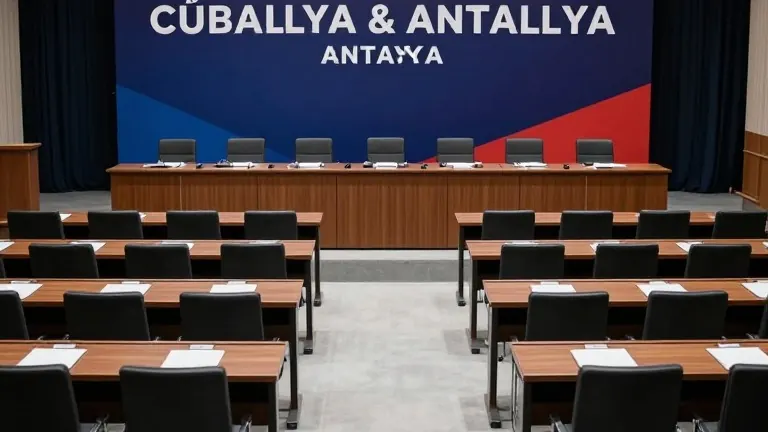
Delegates from 39 small island states arrived in Antalya, Turkey, with a specific financial ask: $700 million. The bloc seeks $500 million for climate resiliency programs and $200 million for early-warning systems to detect natural disasters. They present this demand during the second and final week of the U.N. climate conference, COP31.
The group argues that current global climate goals are no longer sufficient. The United Nations recently announced that the world is unlikely to cap global warming at 1.5 degrees Celsius above preindustrial levels. For island nations, this metric represents a survival line rather than a target. Adelle Thomas, senior director of the Natural Resources Defense Council and a native of the Bahamas, stated that the real question is whether political ambition is catching up with the lived reality of these communities.
Tonga Prime Minister Fatafehi Fakafānua rejected the need for further scientific analysis or extended diplomatic discussions. In an interview with The Associated Press, he said, “We don’t need more studies. We don’t need more negotiations. We just need more action.” Tonga, like many Pacific nations, has a maritime territory far larger than its land mass. Record ocean temperatures threaten the marine life its population depends on, while melting glaciers contribute to sea level rise, increasing risks of erosion and flooding.
Ilana Seid, chair of the Alliance of Small Island States and U.N. ambassador from Palau, explained that individual island economies are small. However, the alliance acts as a unified voice. “On our own, individual SIDS are small economies. We have little leverage, but when you put us together and we speak with one voice, we can speak pretty loudly and pretty strongly,” Seid said. The alliance includes nations from the Pacific, Caribbean, and African regions, all facing similar vulnerabilities.
The conference faces criticism because many agreements reached are voluntary and nonbinding. No global agreement exists yet on how to transition away from fossil fuels. This gap has led to growing frustration among leaders and activists who believe the process is moving too slowly. Atiterentaai Rinimarawa, a 24-year-old youth representative from Kiribati, emphasized that her generation’s future is at stake. “We are not asking for sympathy, but we are calling for climate justice, stronger commitment and real action,” she said.
Fakafānua noted that the island voice has grown louder in recent years, particularly with Australia co-hosting the event and Fiji organizing a pre-COP meeting in October. “I absolutely think that our voice has been elevated,” Fakafānua said. “It just speaks to how far we have come, and it’s taken this long, up to COP31, for us to be really center stage.” The alliance views its presence as a way to pressure larger polluters to pay for adaptation and recovery costs.
The United States, the world’s largest economy and a major emitter, is absent from the talks for the second consecutive year. Fakafānua described the process as frustrating but maintained that progress has been made. “We’ve definitely made progress and we’re better with COP than without,” he said. Thomas added that while the world may overshoot its 1.5-degree goal, the talks have prevented even higher temperatures. She described the effort as a long-term game that does not align with the pace of current climate impacts.
This year has seen record-breaking ocean temperatures in August and a strengthening El Niño pattern. The Iran war has also driven up energy prices, adding economic strain to island economies. Qiyun Woo, a youth environmentalist from Singapore, said the talks need to restore faith in the process. “Faith young people should have in these processes and in world leaders helping to secure a more livable future for generations to come,” Woo said. Other global summits in China and the Philippines are currently competing for international attention.