Tankers damaged in Strait of Hormuz as Qatari delegation visits Tehran
Three vessels were hit near the strategic waterway on Saturday while Iran held mediation talks with Qatar, amid ongoing diplomatic efforts to end the war with the United States and Israel.
By Amir Shah ·
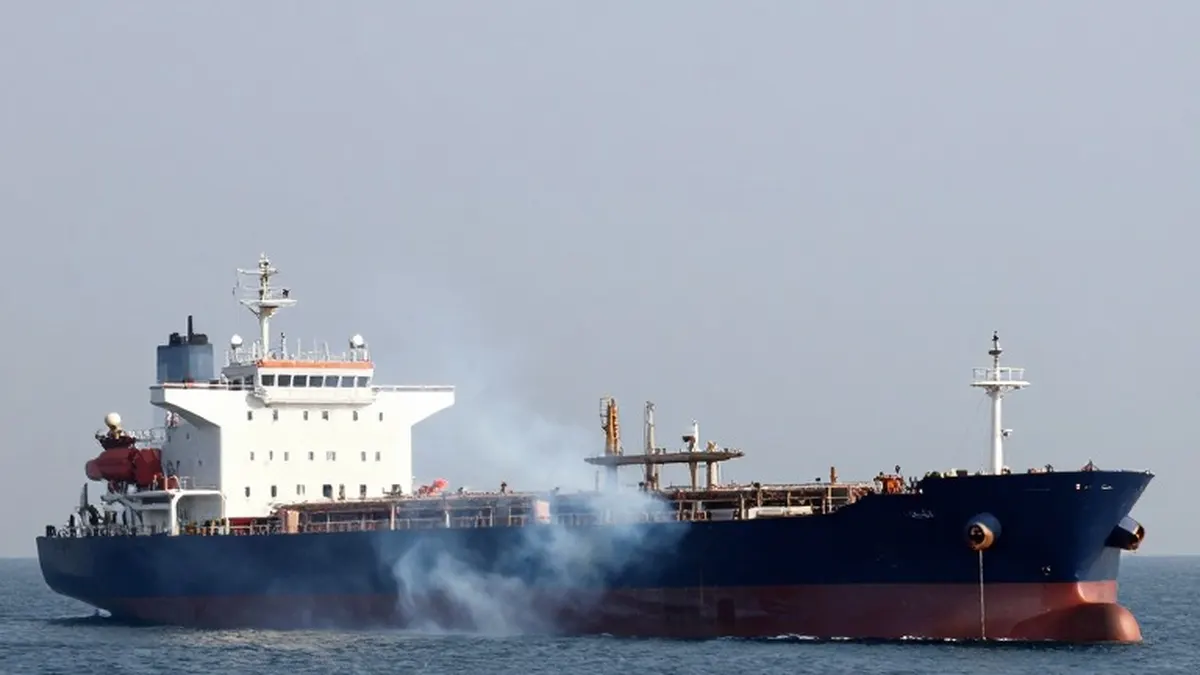
Three tankers sustained damage in or near the Strait of Hormuz on Saturday, an event that appears to mark the latest Iranian strike on shipping through the critical chokepoint. These incidents occurred as Iranian officials announced that a Qatari delegation had visited Tehran the previous evening for mediation talks. The diplomatic mission aims to continue efforts to end the war that has persisted for nearly nine months.
The conflict, which began in late February with joint US and Israeli strikes on Iran, has stalled in negotiations between Washington and Tehran. The Strait of Hormuz has become a central focal point of the stalemate. Iran continues to attempt to blockade the waterway by targeting vessels that cross without its permission, while the US military escorts ships through the strait. The US also maintains a counter-blockade of Iranian ports, a strategy intended to pressure Tehran economically.
Kazem Gharibabadi, Iran's deputy foreign minister, confirmed that the Qatari delegation engaged in two hours of discussions in Tehran, though specific details of the agenda were not released. Foreign Minister Abbas Araghchi emphasized the need to give regional talks a chance and to lift the blockade rationally. He stated that Iran's position remains clear: discussing the opening of the Strait of Hormuz is pointless until Iran's demands are met. These demands include ending the war on all fronts, unfreezing Iranian assets, lifting oil sanctions, and ending the US counter-blockade.
US President Donald Trump has indicated that while Iran desires a deal, the current terms are not acceptable to him. The UK Maritime Trade Operations Center reported that two tankers were struck by projectiles early Saturday while exiting the Persian Gulf. One vessel was hit in the stern, and the other in the engine room, with no casualties reported. Separately, the Iranian navy stated that a tanker hit a naval mine east of the strait before noon on Saturday, catching fire in the process.
Iranian state media claimed that the military conducted its most intense operations yet in the strait overnight to stop vessels, aiming to disrupt US escort efforts. Tehran also claimed on Saturday that it shot down a US drone over Qeshm Island. While the US military recently stated it had cleared mines from the main routes of the strait, Tehran has frequently announced that ships have caught fire, often attributing the cause to mines.
In a separate development, the Iranian army claimed that its air defense systems fired a missile at a US F-16 fighter jet over the Gulf on November 20. The claim, supported by a video released by state media, suggested the missile damaged the aircraft, forcing the pilot to abort the mission and make an emergency landing. US Central Command, or CENTCOM, denied the claim, stating that Iran did not attack a US F-16 and that all US fighter jets in the region were safe and accounted for.
In an interview with the state-run Iran Daily, Foreign Minister Araghchi reiterated that Tehran would not allow its stockpiles of enriched uranium to leave the country. He noted that China and Russia oppose any change in Iran's nuclear doctrine, despite domestic calls from hardliners to shift policy. Araghchi said that the current doctrine remains unchanged, with official positions staying the same as before. The debate over a potential nuclear weapon has resurfaced following recent exchanges of fire between Iran and its adversaries.
The war entered a fragile truce in April, but Qatari-led mediation has not yet secured a permanent peace deal. Despite the truce, the US and Iran have repeatedly exchanged fire, including last week when the US bombed an Iranian island and Iran attacked Kuwait and Bahrain. Renewed speculation exists regarding a new US and Israeli offensive, with President Trump weighing a resumption of major strikes amidst political pressure at home.
President Masoud Pezeshkian stated that US and Israeli strikes on Iran's energy infrastructure have worsened the country's energy problems ahead of winter. He warned that the damage to gas infrastructure would lead to difficulties for the coming season. Mohammad Allahdad, head of Iran's national electricity company, confirmed that the country would impose rolling power cuts starting Sunday due to fuel supply conditions.
In a display of military strength, Iranian state media released a video showing IRGC commander-in-chief Ahmad Vahidi visiting an underground missile city for the first time. Vahidi and IRGC Aerospace Force chief Majid Mousavi toured the site, where a new twin-missile launcher was unveiled. The location of the site was not specified, though a similar video of an underground facility was released by state media the previous week.