Gaza border communities surpass pre-war population as reconstruction efforts continue
Gaza border communities have exceeded their pre-war population as reconstruction continues, supported by grassroots efforts in infrastructure, healthcare, and social welfare.
By Daniela Kelly ·
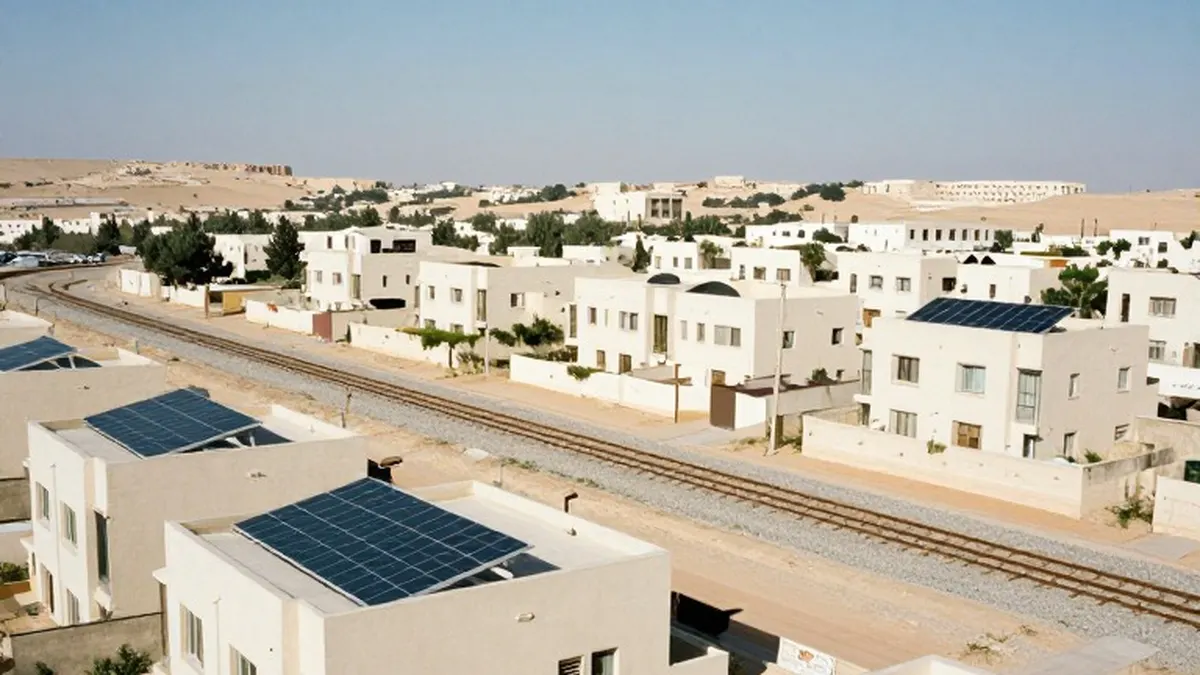
The population of Israel’s Gaza border region has reached approximately 66,000, exceeding pre-war levels by about 5,000 residents. According to data released by the government's Tekuma Directorate in September 2026, more than 90% of those who evacuated after the October 7, 2023 attack have returned to their homes. While reconstruction remains ongoing in key areas such as Be'eri, Nir Oz, and Kfar Aza, the region is seeing a significant demographic rebound.
This recovery is supported by grassroots initiatives like Atid LaOtef, a movement established after the Hamas-led attack to coordinate regional development. The organization's impact report for the first half of 2026 highlights its efforts to unify 59 communities and five local authorities under the principle that no decisions should be made about the region without its residents. By the end of June, the movement had grown to include over 10,400 members and approximately 3,900 participants in its digital information networks.
Local families have played a vital role in this recovery. Under the Otef Hosts initiative, residents provided temporary accommodation for 350 displaced families over a 40-day period in spring 2026. One guest, software developer Yonatan Bashan, developed an application to streamline the coordination of these housing requests, which numbered over 400 during the campaign.
Infrastructure improvements have also been crucial to the region's revival. After the Sderot-Ashkelon railway line was suspended for security reasons, residents campaigned for its restoration. Trains began operating on a single track in February 2025, with full restrictions lifted by autumn 2025. The line now serves approximately 10,000 passengers daily, generating an estimated 300 million shekels in annual economic benefits. Plans to add stops in Holon and Bat Yam were adjusted following resident advocacy to ensure faster peak-hour services.
Beyond physical infrastructure, the movement has influenced social policy. In January 2026, the Knesset approved a law expanding financial support for adult orphans who lost their last surviving parent in a terrorist attack. This change, driven by the efforts of around 40 affected individuals and their partners, now qualifies 150 people for monthly payments of approximately 8,600 shekels.
Security concerns remain a priority for residents, who seek greater transparency regarding border activities. The movement has collected data on incidents such as the discovery of GPS-equipped balloons near border communities to identify patterns and share findings with authorities. Additionally, the organization successfully halted proposed budget cuts to local security infrastructure in May 2026 after regional stakeholders opposed the decision.
Healthcare and youth retention are also central to the region's future. Atid LaOtef has surveyed residents to address the long-term physical and psychological effects of the conflict. A conference held in June 2026 brought together 300 specialists to discuss trauma care. Local leaders emphasize the need for more cultural and job opportunities to keep young people in the region.
Looking ahead, the Tekuma Directorate's special mandate is set to expire in 2028, with the current program involving 17.5 billion shekels in investment. Atid LaOtef is developing a charter with five demands for future governments, including a regional approach to development and preserved funding. The movement is already planning for the next 20 years, aiming to ensure the border region thrives beyond the emergency reconstruction phase.