Forstag Claims Montana House Seat After Three Decade Democratic Drought
The former firefighter won a district that spans national parks and rural towns, citing frustration with federal job cuts and high gas prices.
By Amir Shah ·
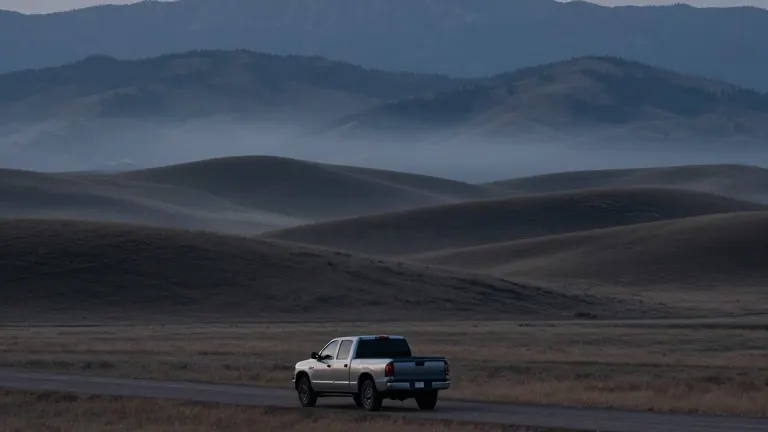
Sam Forstag declared victory in the Montana U.S. House race on November 3, ending a 32 year wait for a Democrat to represent the state in Congress. The former firefighter faces a challenge in a region that has voted for Donald Trump in every presidential election since 2016. Forstag’s win breaks a long standing pattern in a district that stretches from Glacier National Park to Yellowstone.
Forstag campaigned on a message that appealed to working class voters regardless of party loyalty. He described his background as a smokejumper, noting he made roughly 19 dollars an hour while jumping out of airplanes into wildfires during the Biden administration. He used that experience to criticize both political parties, telling a crowd in Missoula that he did not care about party labels. He said he only cared about people working for working people.
The candidate targeted President Trump’s policies, specifically the reduction of public lands protections and federal services. He framed Trump as a corrupt billionaire who was gutting the agencies that support Montana’s tourism economy. Forstag also highlighted the impact of the Department of Government Efficiency cuts. He pointed to the loss of hundreds of federal jobs in the state as a key reason for voter dissatisfaction.
Political analysts suggest Forstag’s strategy focused on the blue collar identity of the state. Lee Banville, a political analyst for Montana Public Radio, noted that the campaign was not about turning Montana blue in a traditional sense. Banville said the goal was to turn the state blue collar. The candidate used social media to project a rugged image, showing work in the woods and criticizing federal job cuts.
Republican state legislator David Bedey attributed the result to a mix of timing and campaign quality. Bedey noted that Trump’s tariffs and the Iran war may have alienated some voters who supported the president in 2024. He also observed that the conservative radio host Aaron Flint, who ran against Forstag, did not generate as much enthusiasm. Bedey stated that many people are fed up with both parties.
Whitney Williams, whose father Pat Williams was the last Democrat to win the district, sees the result as a sign that rural America is shifting. Williams said Democrats previously did a poor job in rural areas but that the numbers show a dramatic change. Forstag’s win in Missoula, a college town, provided a base for his statewide effort. He addressed the press in jeans and a Carhartt jacket, standing in the freezing fog the day after the election.
The district is known for split ticket voting, a tradition that predates the current political alignment. Voters in the area often support candidates from different parties for different offices. Forstag’s team argued that this tradition allowed them to win despite the state’s overall Republican lean. The victory provides a potential roadmap for Democrats seeking to compete in rural areas across the country.
Forstag is now on Capitol Hill for freshman orientation. He was born the same year the last Democrat won the seat, a fact that underscores the length of the gap. The candidate’s rise offers a specific case study for how to connect with voters who are skeptical of both major parties. His campaign focused on authenticity and direct representation for the working class.